
“Lest we forget…” What happens to War Memorials in closed and closing churches?

Dr Peter Christie
Inverclyde Church Recorders
Nov 2025
Scotland’s churches were once believed to be a safe repository for thousands of precious items of historical or cultural importance and for memorials to local individuals and those that had sadly fallen in the service of their country. Unfortunately, with hundreds of churches across the country in the process of being closed and sold, the future of many of these artefacts is uncertain. In his latest blog for us, Dr Peter Christie, one of the founding members of the Inverclyde Church Recorders, reflects upon the war memorials he and his colleagues have documented in the churches they have recorded on the west coast of the country.
We have very recently held services of Remembrance in many churches across Scotland. One of the more sombre parts of the heritage rapid recording process carried out by SCT’s volunteer teams is the documenting and photographing of the various forms of War Memorial inside the closed or closing churches we visit. What happens to these memorials when the church building is disposed of? A lot of the time, no-one really knows. This is a very sensitive area; for many folk the loss of access to, or destruction of, these memorials is unconscionable. As a member of the clergy recently said to me:
“This is the process for disowning or dismembering our history and the generations before us. Disintegration follows”.
There has been a lot of adverse publicity in the media recently regarding the possibility of marble memorials from both World Wars being left in situ in the recently sold Burghead Parish Church, despite the buyer’s intention of conversion of the building to use as a supermarket. Although the memorials would technically still be publicly accessible, there has been much local and national criticism of the propriety and dignity of such a situation. The local Presbytery cited excessive cost of removal of the memorials, but say they are still pursuing options. Anecdotally, we also hear of memorials inside churches elsewhere in the UK occasionally being found in skips or scrap yards, and often the ultimate fate of memorials of all kinds lies in the hands of the new owners.
War Memorials with a full listing of the names of the dead take a wide variety of physical forms – most often simple flat bronze or brass plaques: but also for example paper/parchment Rolls of Honour (at particular risk of being rolled up and left behind in cupboards); cast or repoussé metal reliefs; carved marble plaques and furnishings such as baptismal fonts; fixed and moveable carved wooden furnishings (eg wall-mounted reredos panels, pulpits and lecterns); stained glass; and wrought iron items such as gates and screens.
In addition to memorials with a complete list of names of the Fallen, there are many family memorials for single named individuals which again can take many forms. We also often encounter memorials without individual names, given by individuals or by church organisations in memory of all those who died.

Many of the memorials are works of art in themselves, particularly those with bronze castings (good examples being the memorials in St Cuthbert’s, Saltcoats, and Finnart Church, Greenock); there is a repoussé brass panel at Neilston by Marion Henderson Wilson, one of the eminent ‘Glasgow Girls’. There is much fine carved woodwork, notably the reredos figures of saints at Finnart St Paul’s Greenock and Hyndland Parish Church Glasgow, and in simpler panels such as at Cathcart Old, Glasgow; St John’s, Largs, has a ‘triptych’ type memorial made with wood from HMS Britannia
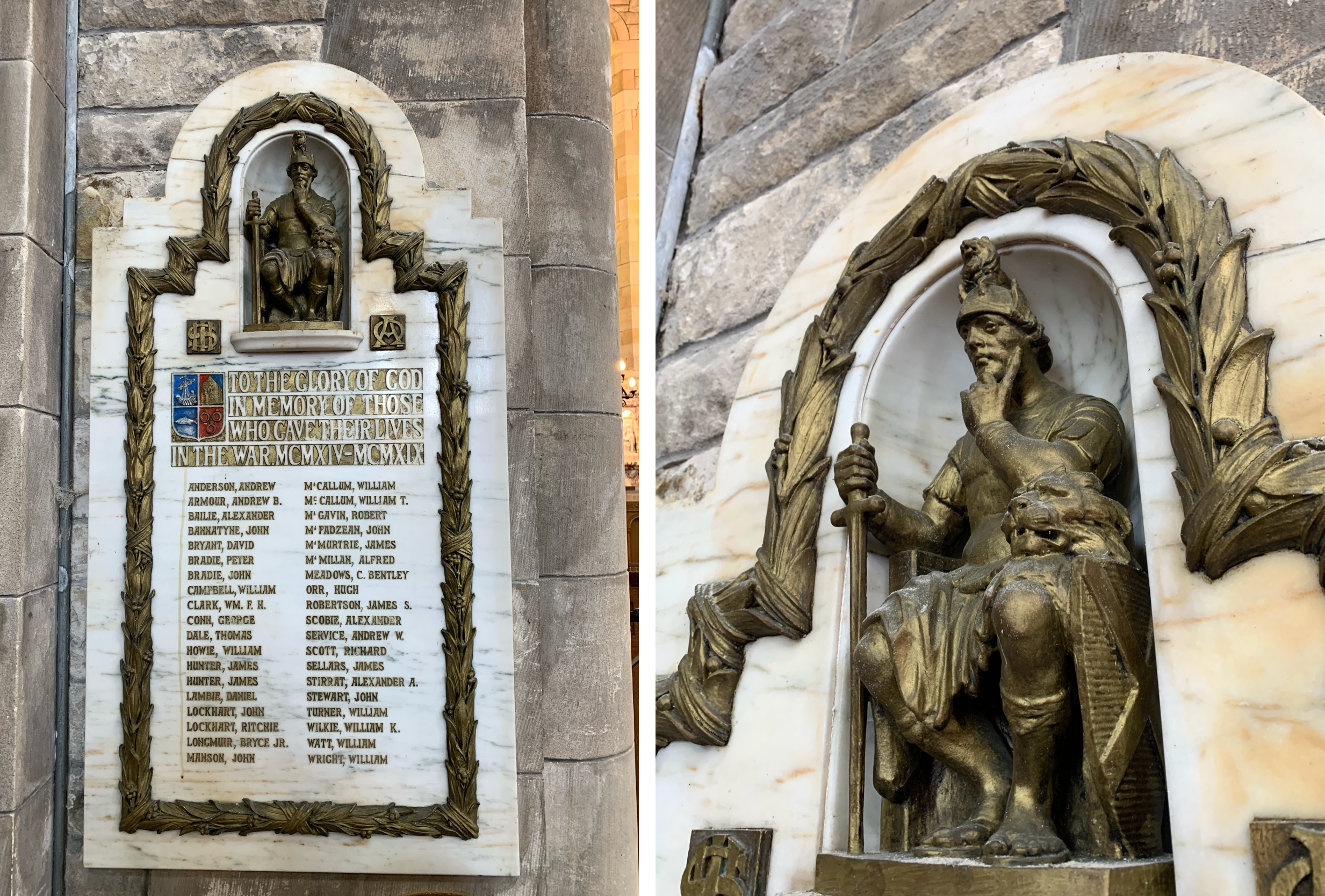
Saltcoats St Cuthbert WW1 bronze
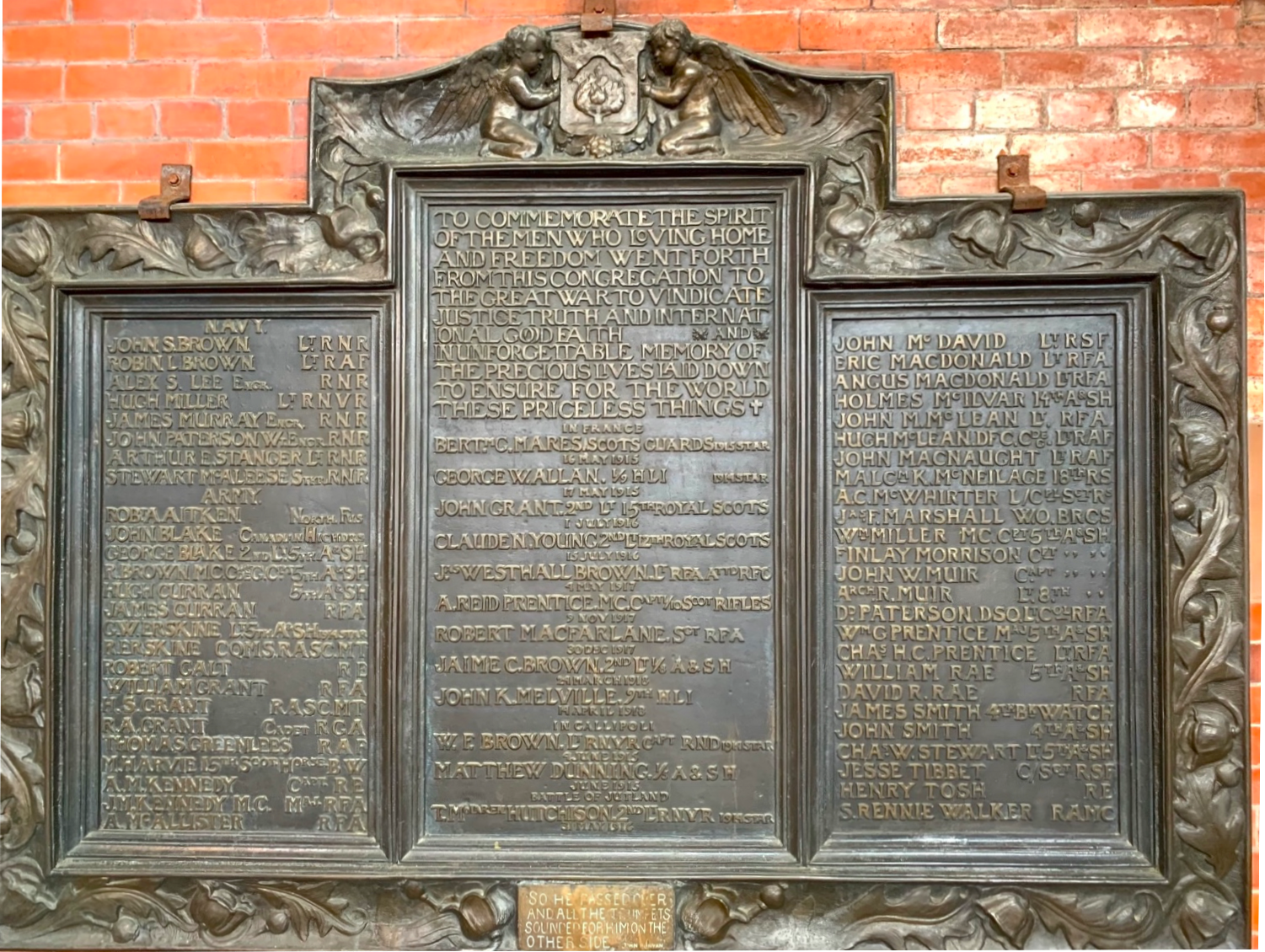
Finnart Church Greenock
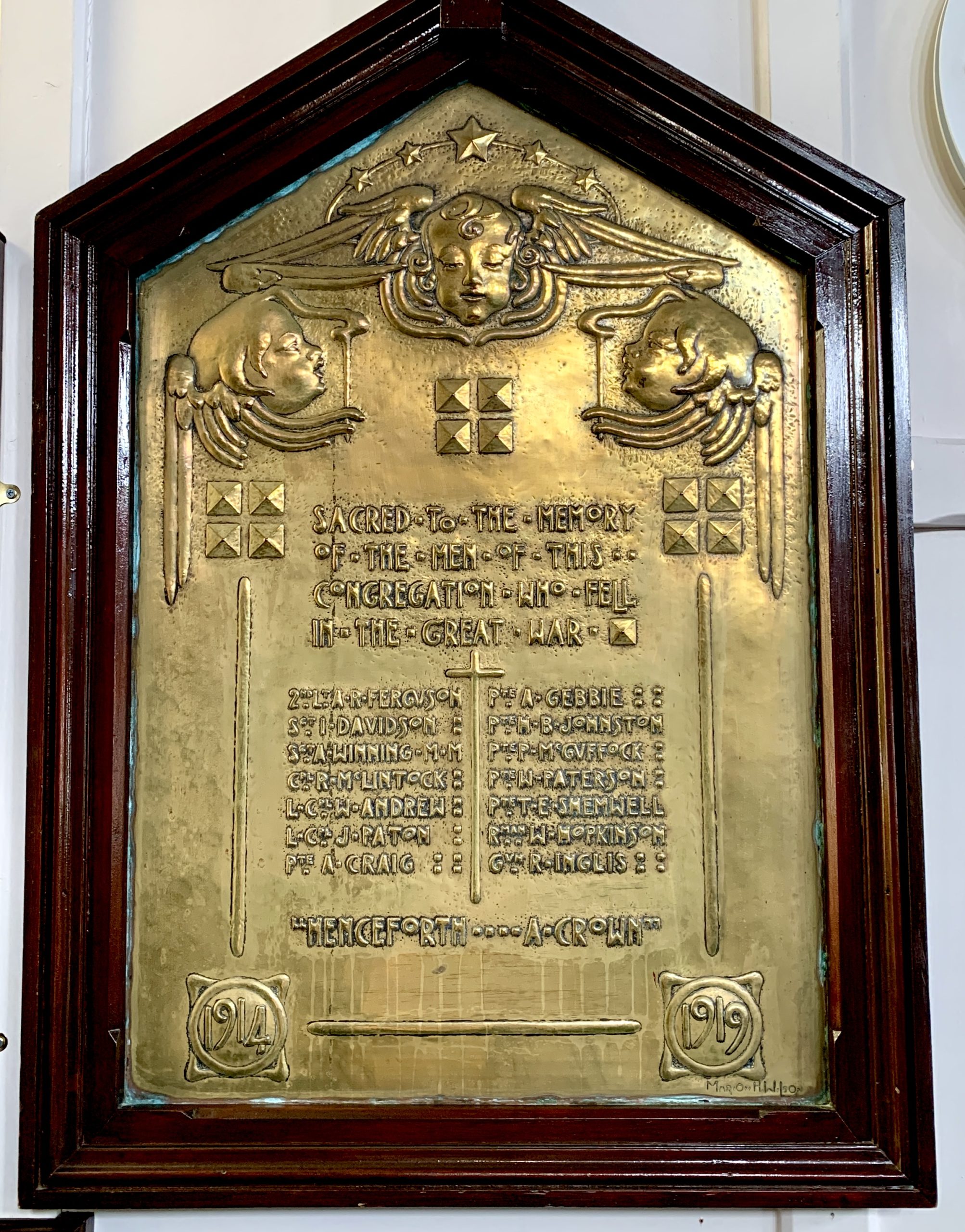
Neilston Parish WW1 Marion Wilson

Finnart St Pauls Greenock reredos
Cathcart Old Church Glasgow
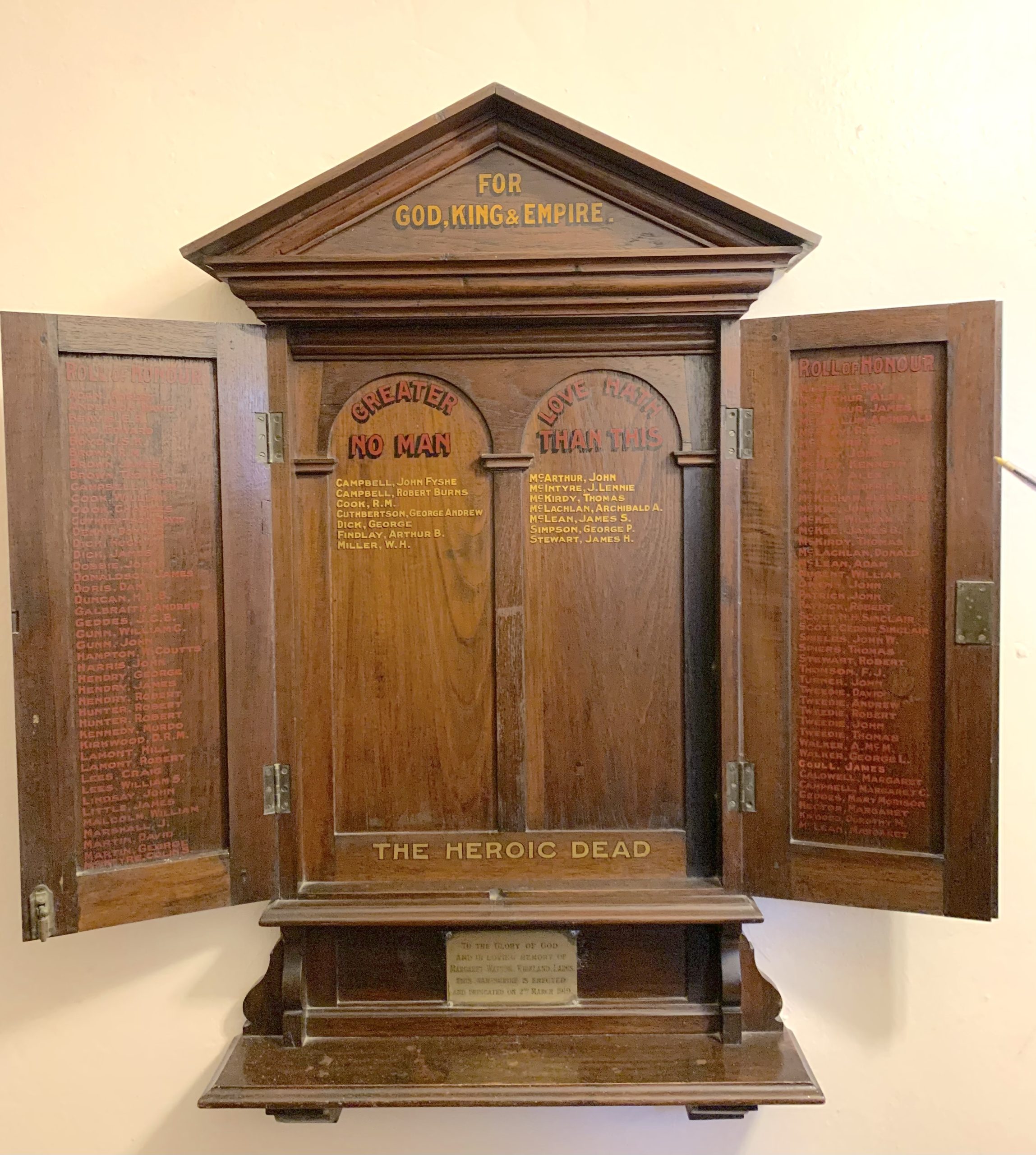
St Johns Largs WW1 triptych
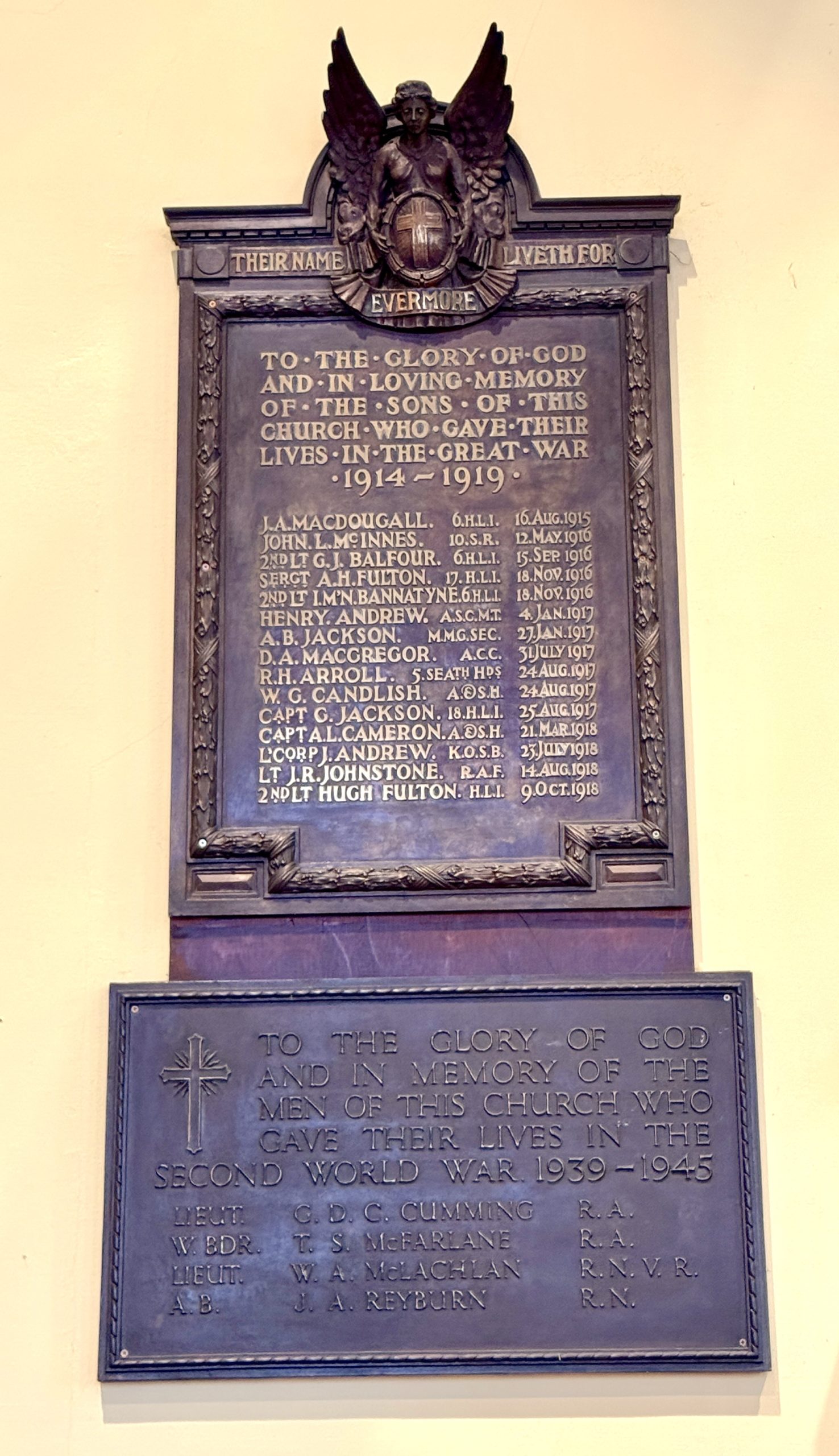
St Machars Ranfurly – Bridge of Weir
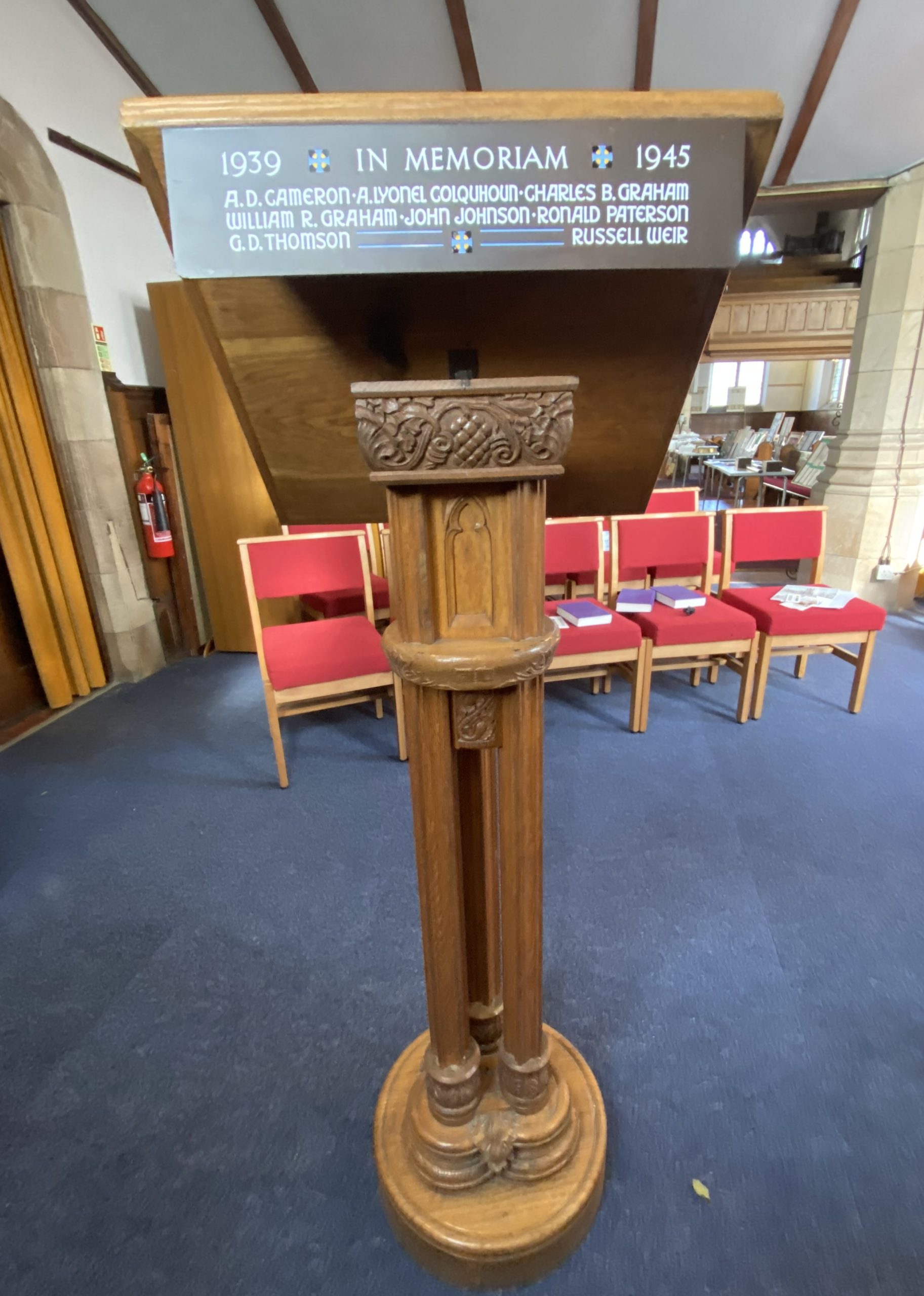
Dunoon High Kirk lectern
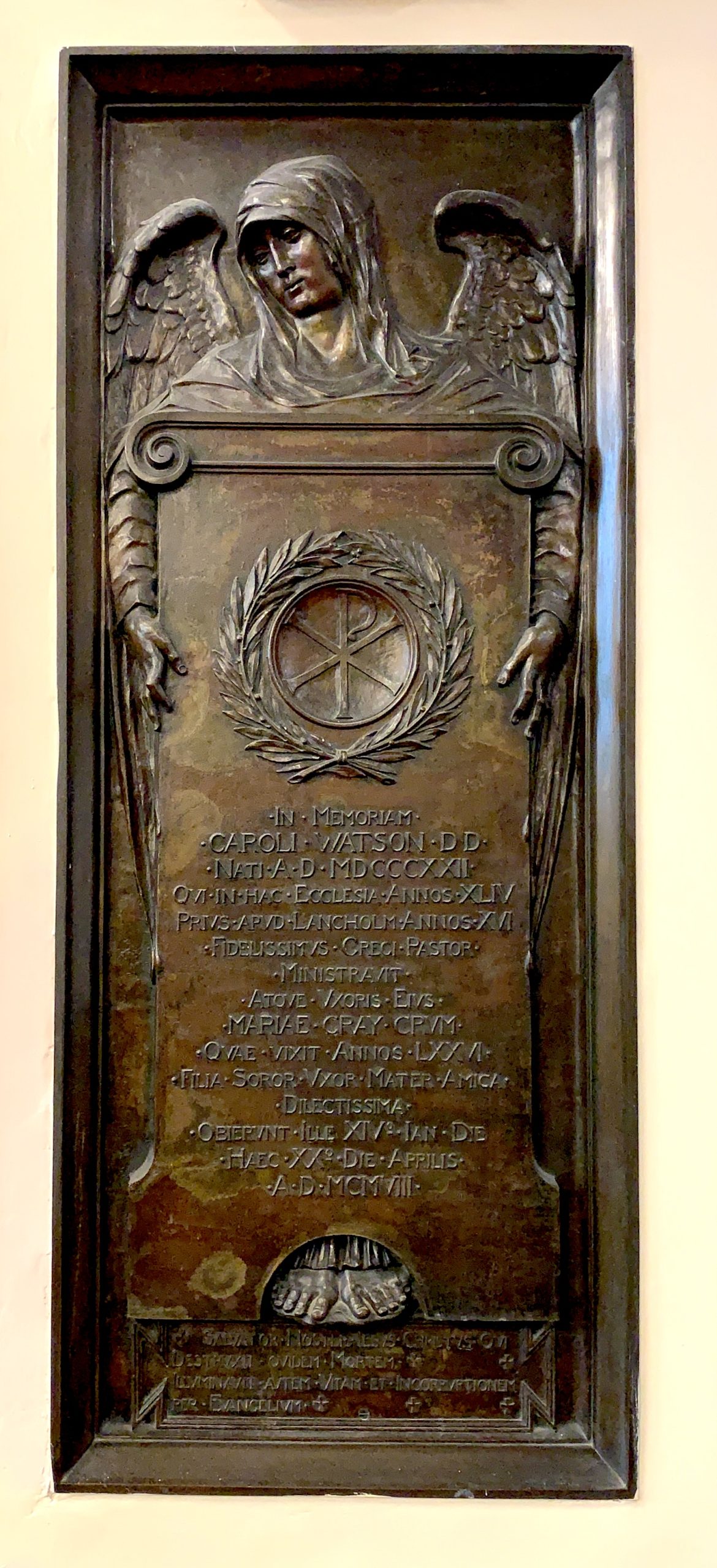
St Johns Largs
The stained glass memorials we have documented usually had no individual names in the glass, such as the memorial windows in Greenock West United Reformed Church and the East window in Hyndland Parish Church Glasgow; one exception is the Abbey Studio window at Neilston Parish Church, which includes all the names of the Fallen in the lower panes.
There are also many donated windows with the name of an individual soldier included in the design (eg the lovely Douglas Hamilton paired circular windows in St John’s Largs).
Stained glass windows are in general almost never removed and re-sited, largely due to cost, listing constraints, or lack of a suitable structural destination.

Greenock West URC stained glass
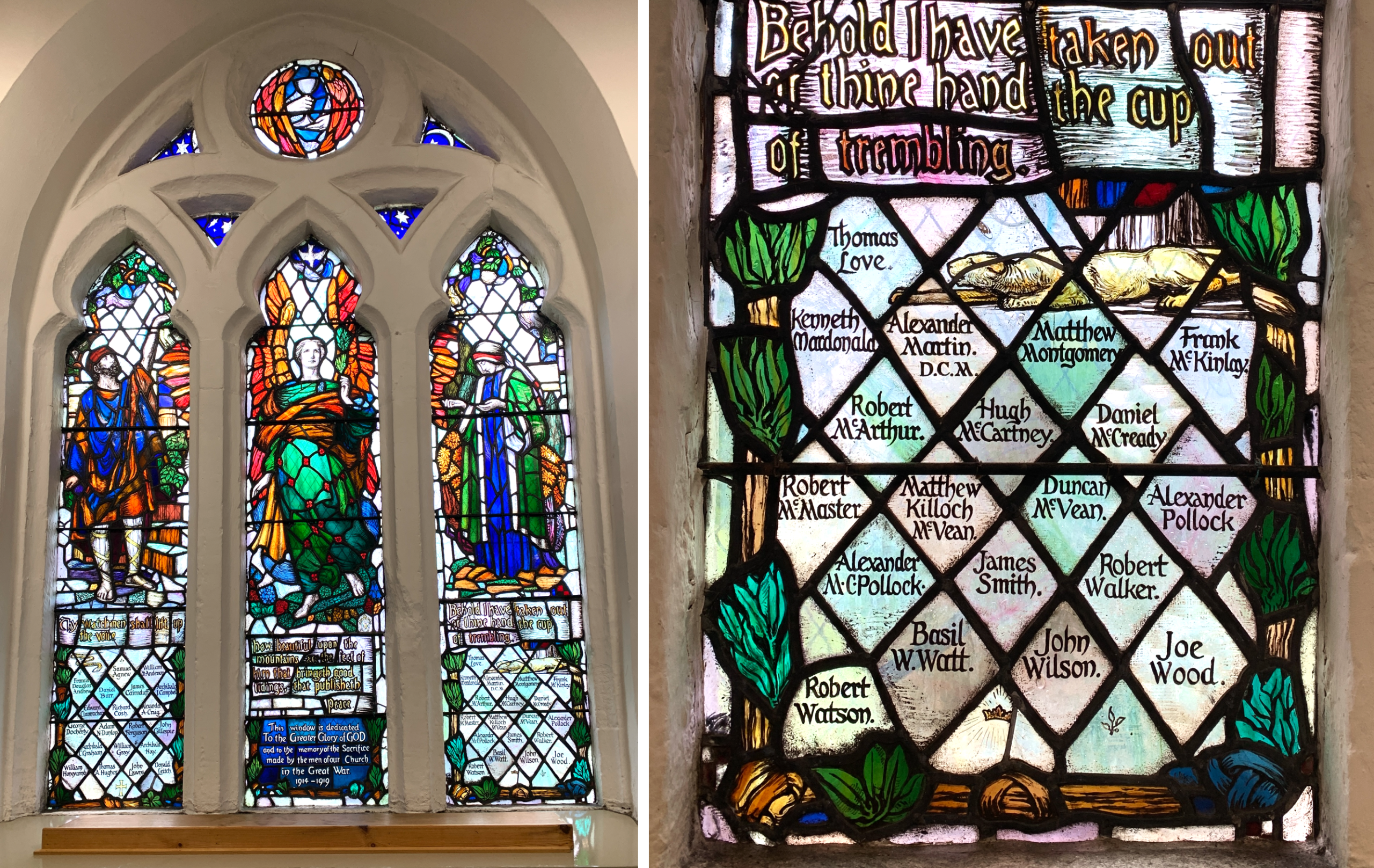
Neilston Parish window
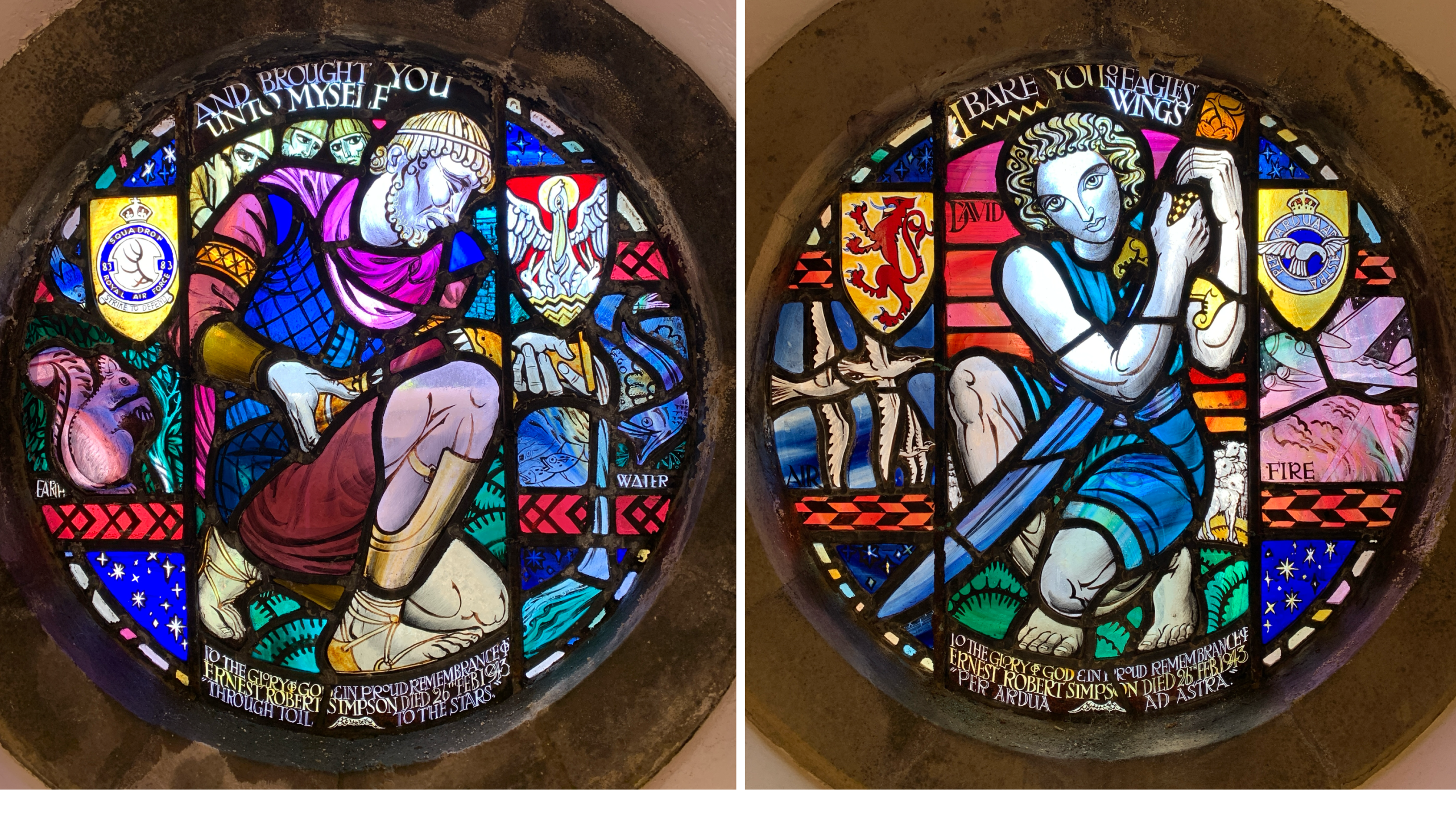
St Johns Largs Simpson memorial windows
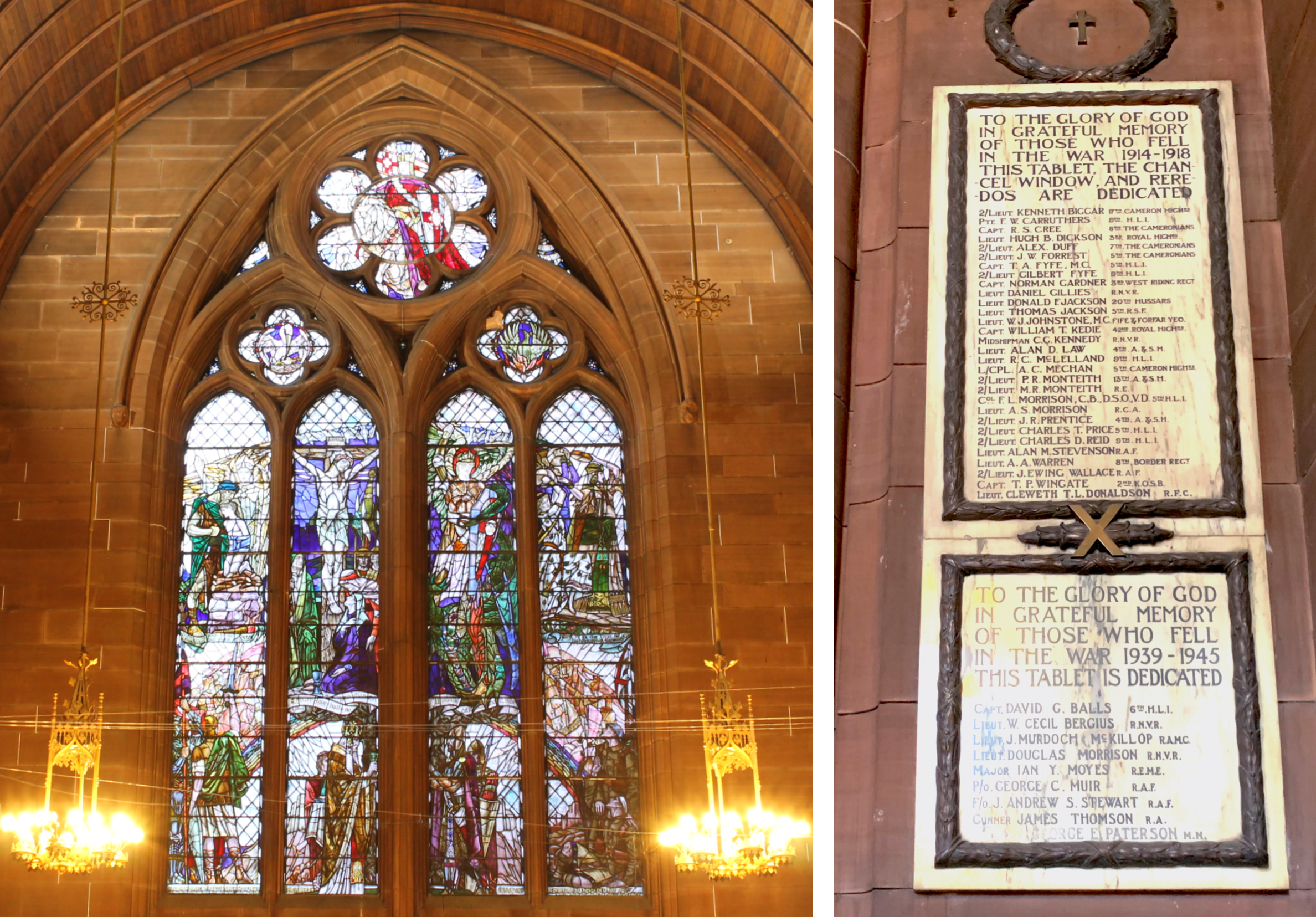
Hyndland PC plaque and window
Internal guidance from the Church of Scotland on the future care of War Memorials in advance of a church closure has changed significantly over recent years. The advice from CARTA (their Committee on Church Art & Architecture) prior to 2020 was quite explicit –
The CARTA committee was ‘discharged’ at the 2020 General Assembly, and responsibility for such matters was transferred to the General Trustees; the current – somewhat less prescriptive – guidance on War Memorials in closing churches now reads:
“Items such as War Memorials should normally be removed, particularly if the building is likely to be used for secular purposes or demolished. In some cases, it may be appropriate to install such items in another Church of Scotland building …The possible need to obtain Listed Building Consent should be borne in mind with regard to the removal of memorials.”
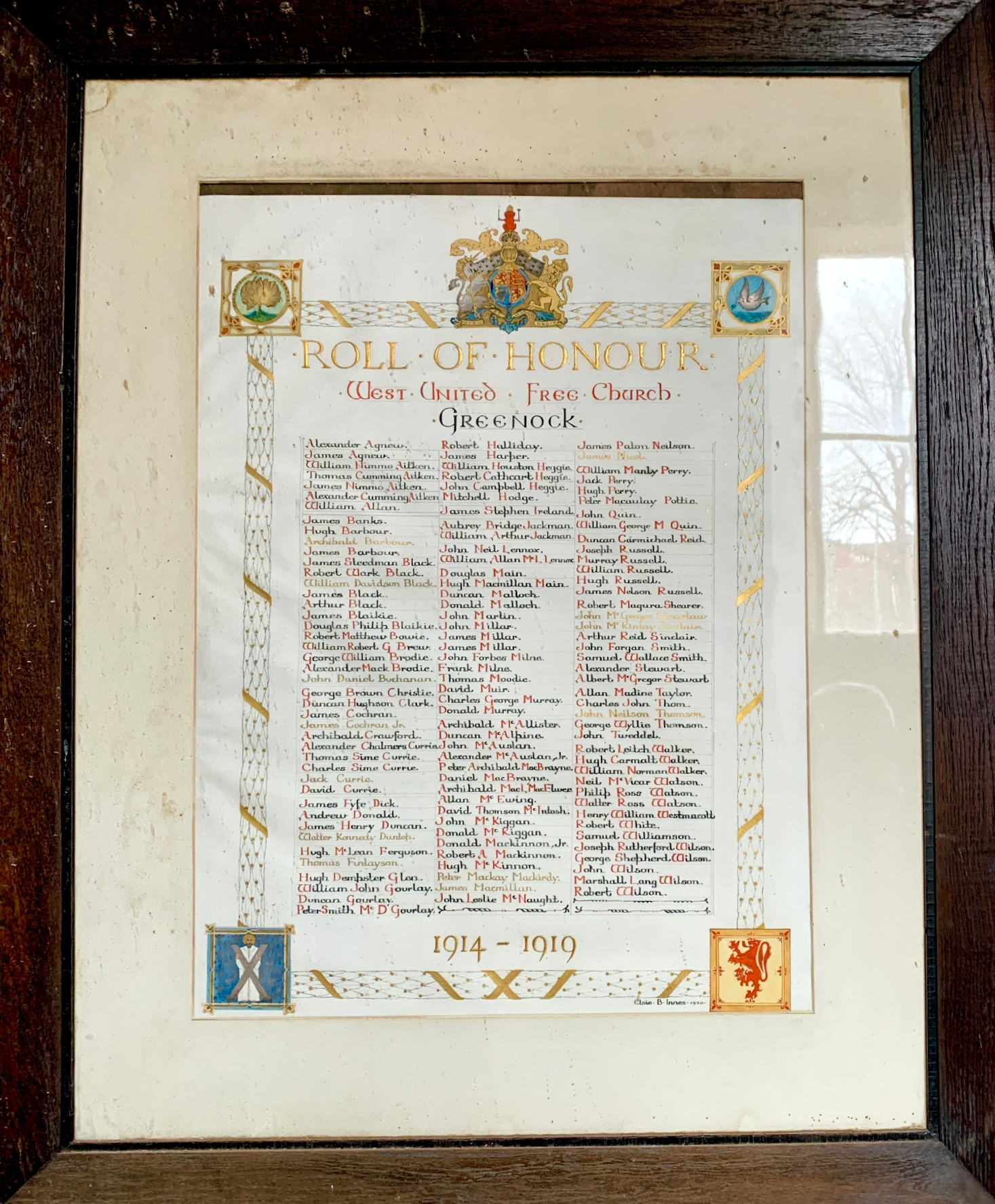
Speaking to our local contacts when visiting closed or closing churches (our Inverclyde volunteer team has recorded 20 churches to date), we always ask about the intended fate of their War Memorials: their answers include a physical transfer to the new united church building; high quality framed photos for display (especially where there would be damage to a listed building if removed); being transferred to a local civic building or community facility; being left in situ, with or without a proviso that the new owner allows public access; or a simple ‘I don’t really know’.
Many churches have inherited memorials from previous unions; for example, Stevenson Memorial / Kelvinbridge Church in Glasgow has thereby accumulated eight memorials from other churches and from the Boy’s Brigade: the new owners, an adjacent school, have happily agreed to take ownership of these memorials and to allow public access.
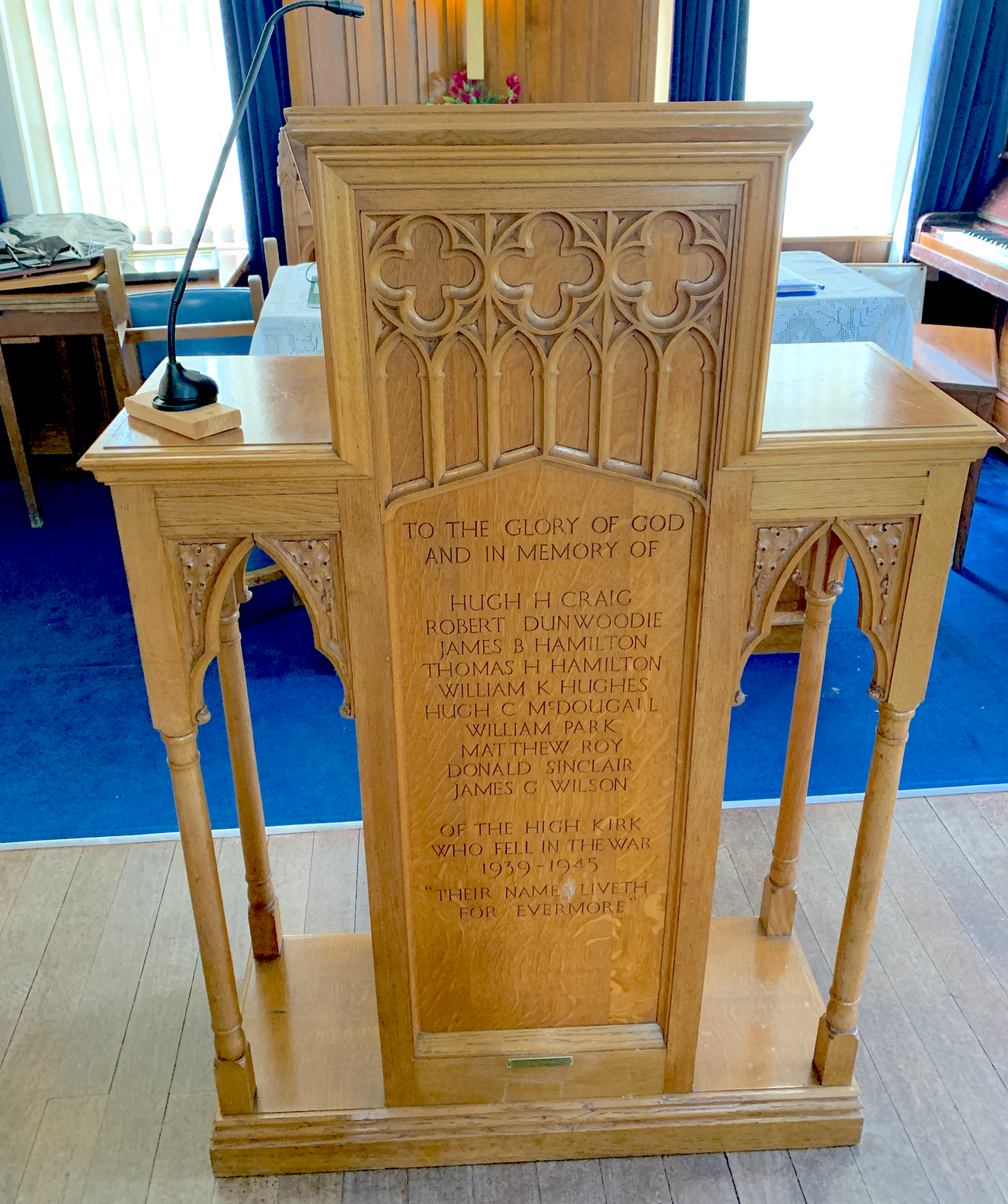
Stevenston High Kirk WW2 lectern
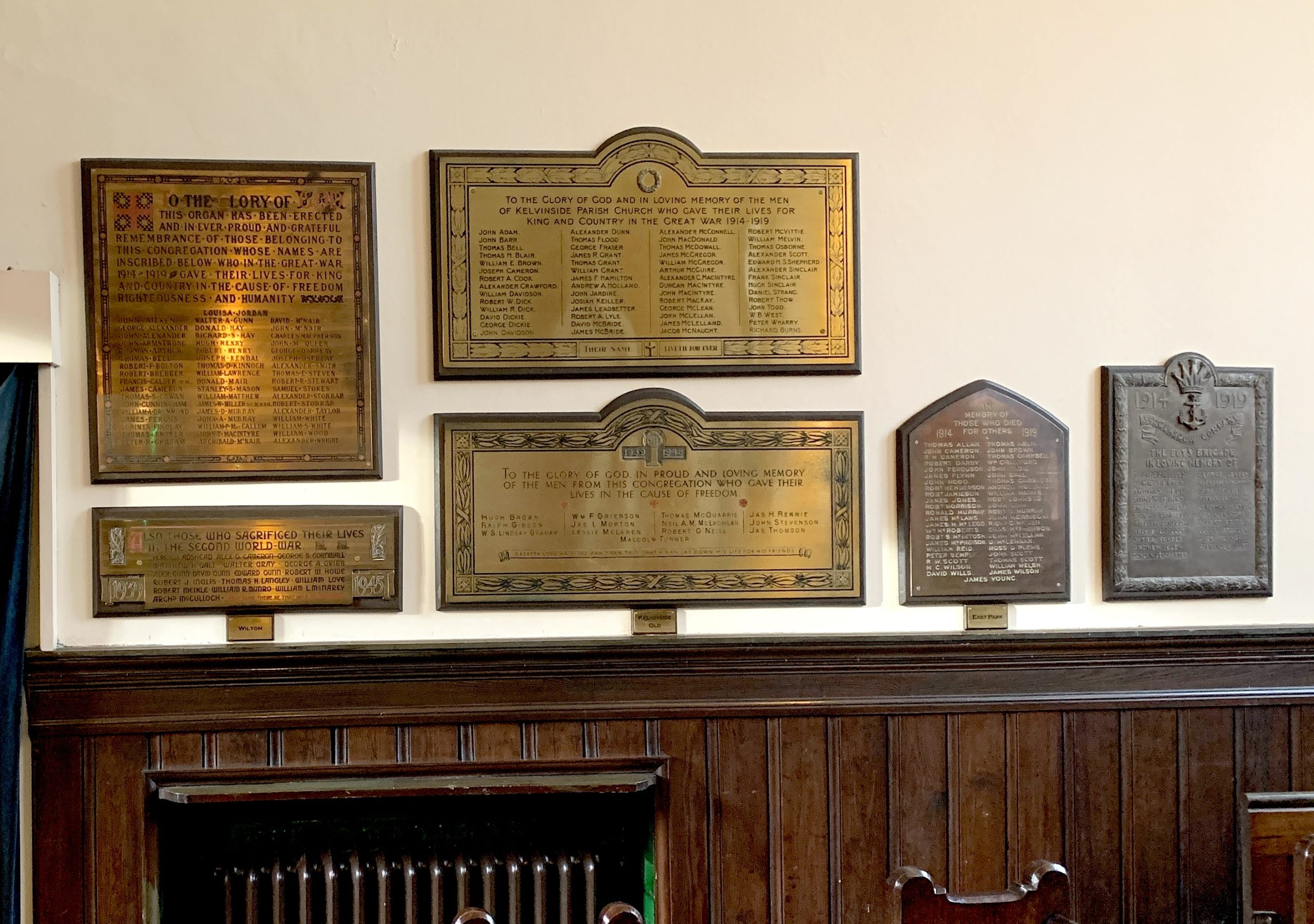
Stevenson Memorial Glasgow plaques
What to do? First off, we need to gather basic information on the ultimate fate of the memorials in our closed and closing churches – an exercise we are about to start in our local area. As with many other heritage issues in closed churches, there is a need for further public awareness of what is happening. And, as our team is doing, recording the names, text and appearance of memorials for the SCT project archive; also ensuring we share our material with bodies like War Memorials Online.
Two of my recent music videos showing these and other War Memorials recorded in our surveys can be found on YouTube below – the fate of many of these memorials is, as they say, ‘uncertain’.
‘At the going down of the sun and in the morning, we will remember them…’
Our thanks to Peter for reflecting upon the future of Scotland’s War Memorials and to him and his fellow Inverclyde Church Recorders Lynnette Robertson, Alison McKenzie, Hannah Reynolds, Jodie Black for the many images that accompany the blog.
If you would like to share your thoughts on any matter relating to Scotland’s religious built or cultural heritage please do get in touch with us.