
Faith in Bloom: The church at heart of the Glasgow Garden Festival
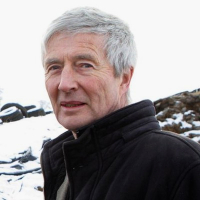
Rev Robin McHaffie
Retired Minister and Chaplain
Over 152 days, between April and September 1988, a derelict former industrial dockland site on the banks of the River Clyde was transformed completely into a colourful, welcoming carnival atmosphere, which would host over four million visitors attending the Glasgow Garden Festival. At the spiritual heart of this iconic event was a temporary church, raised by an ecumenical committee to offer visitors a peaceful sanctuary amidst the thronging crowds. Rev Robin McHaffie was the local Church of Scotland parish minister at the time and he has kindly shared with us these images and recollections of this short-lived building, the inspiration behind it and what it represented to those that made use of it during the Festival.
A unique church, set in an adventurous garden, which was conceived, funded, built then translated to Carfin all within a year.
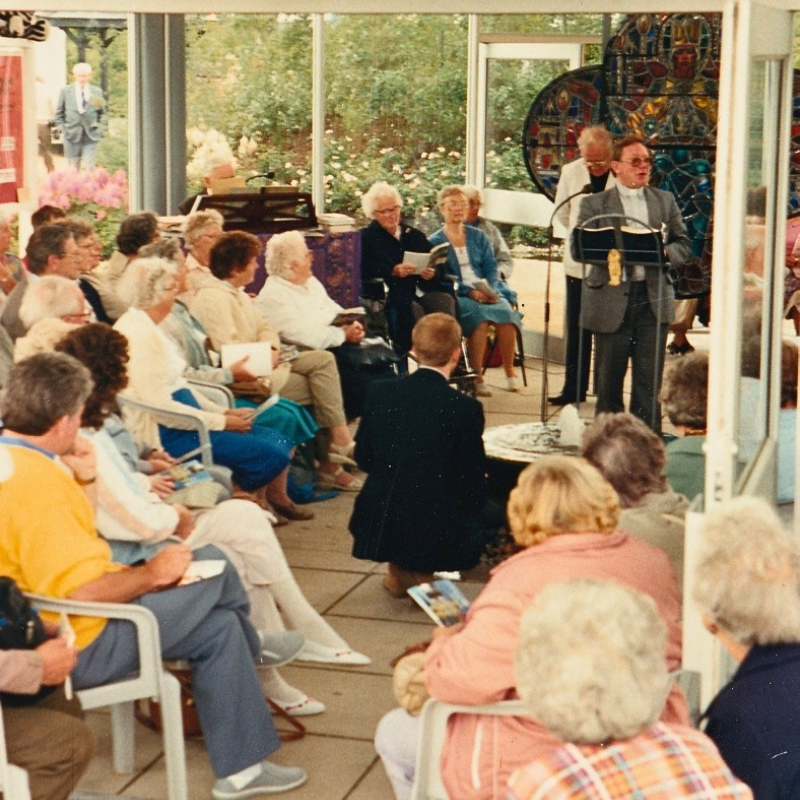
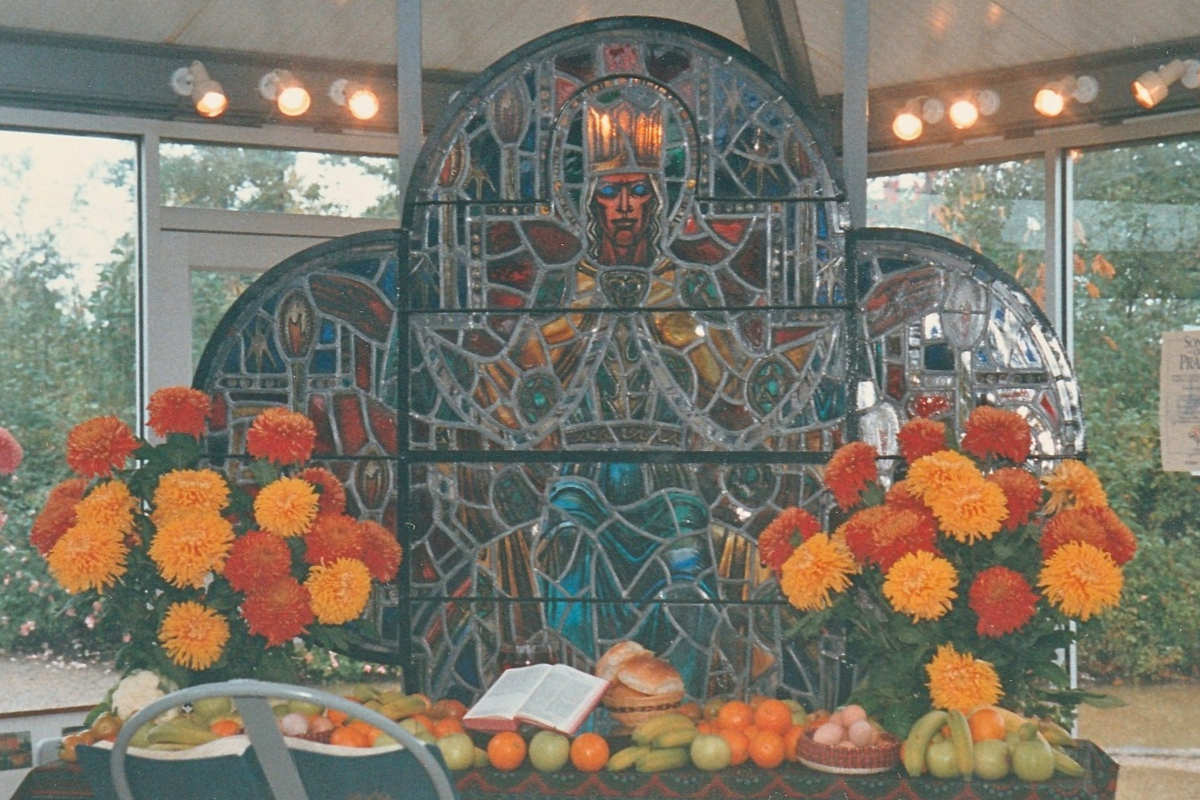
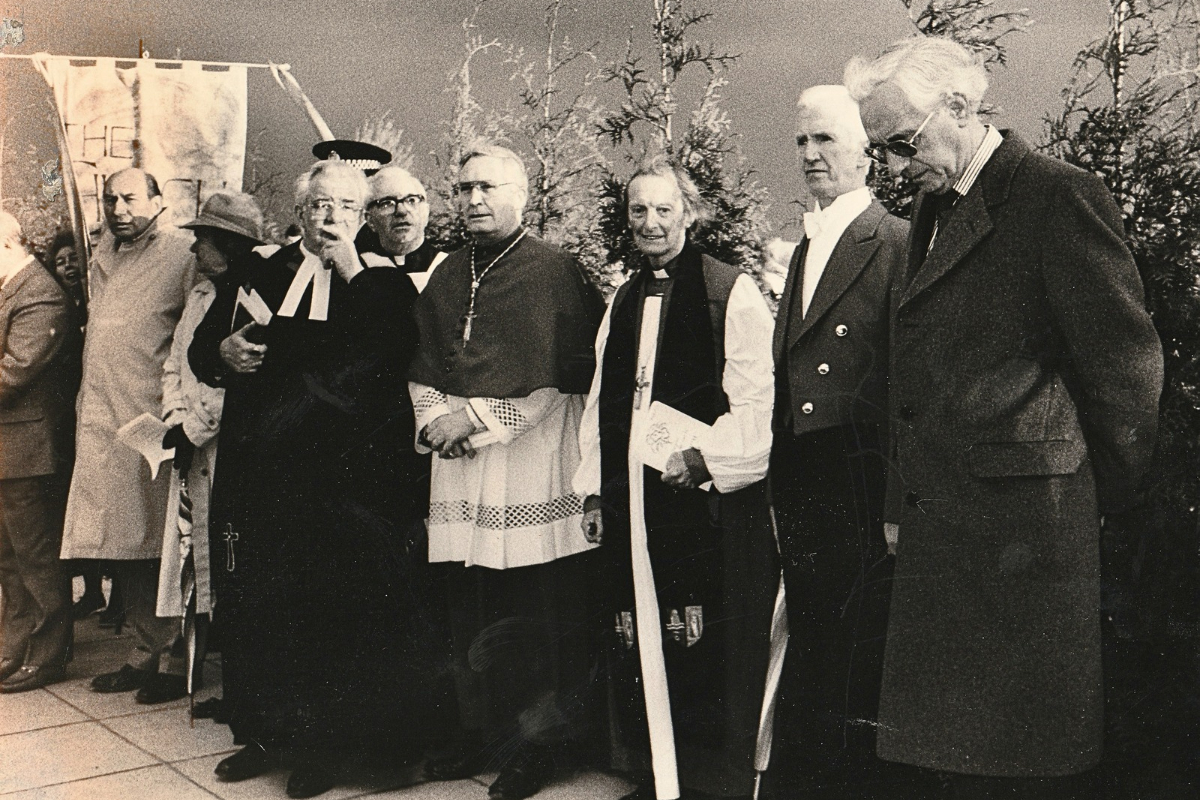
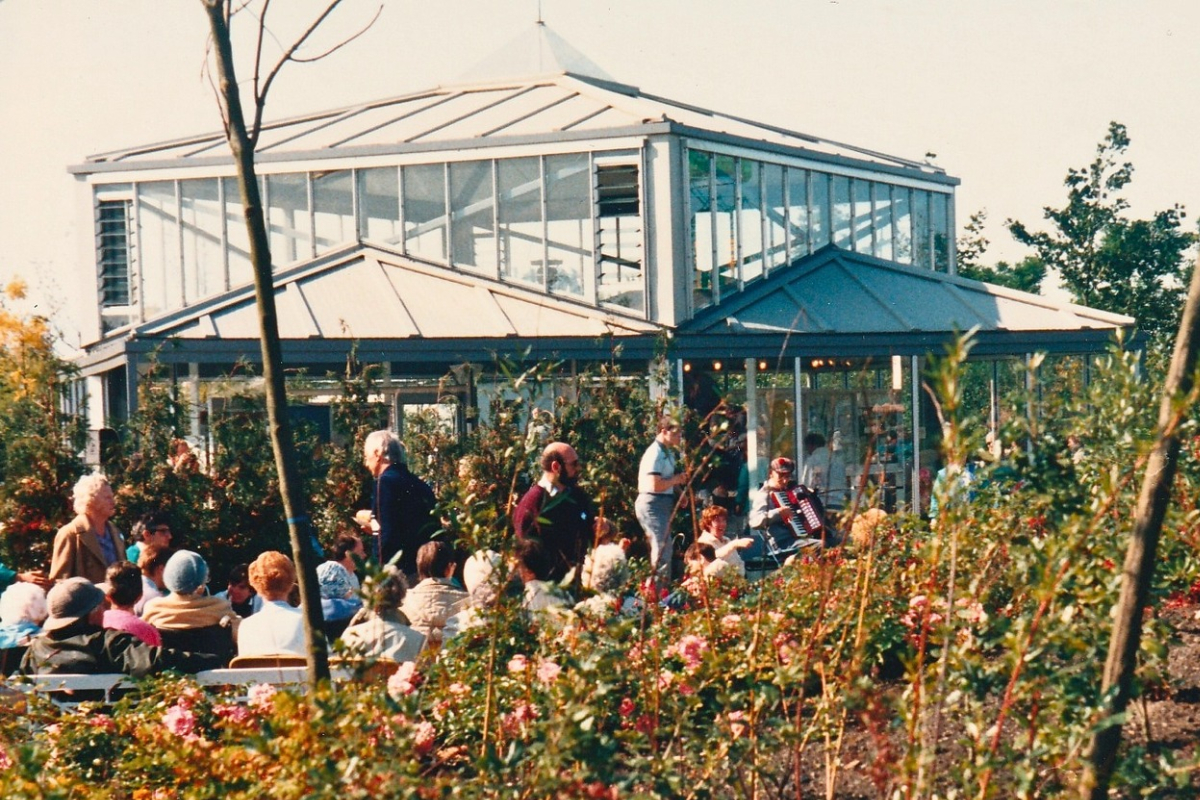
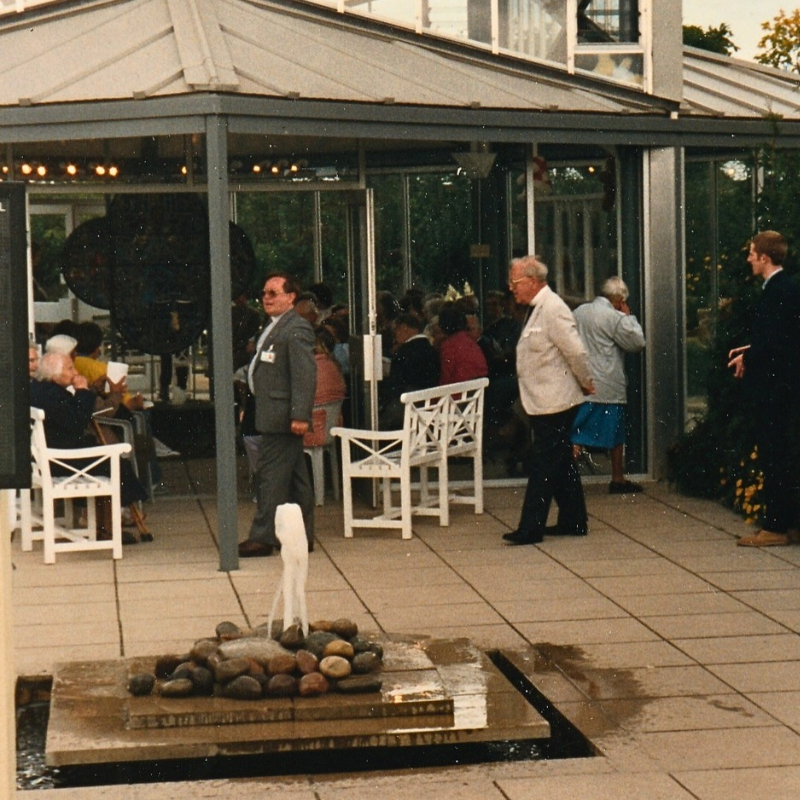
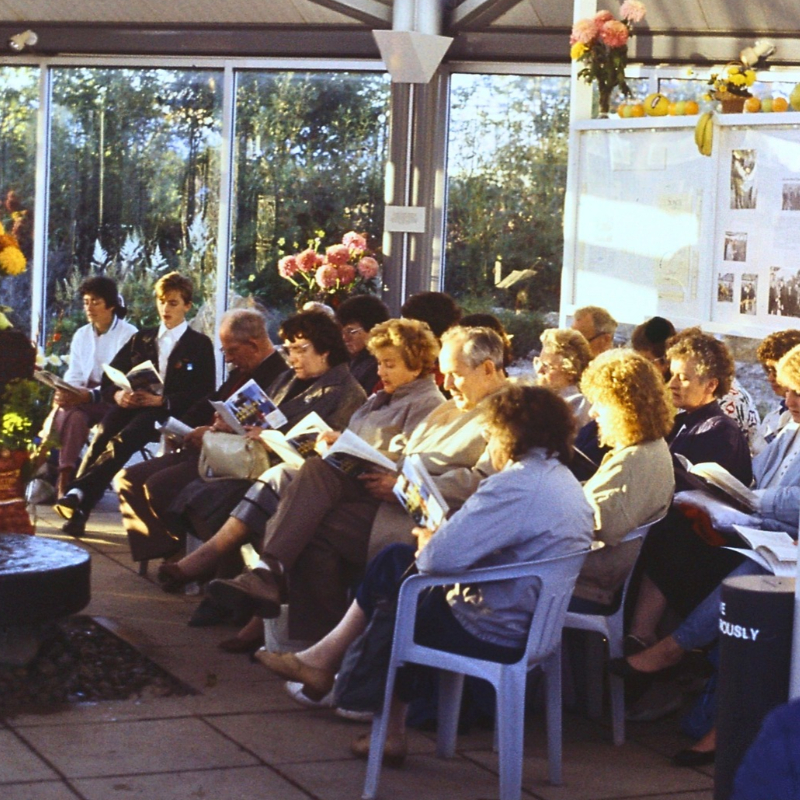
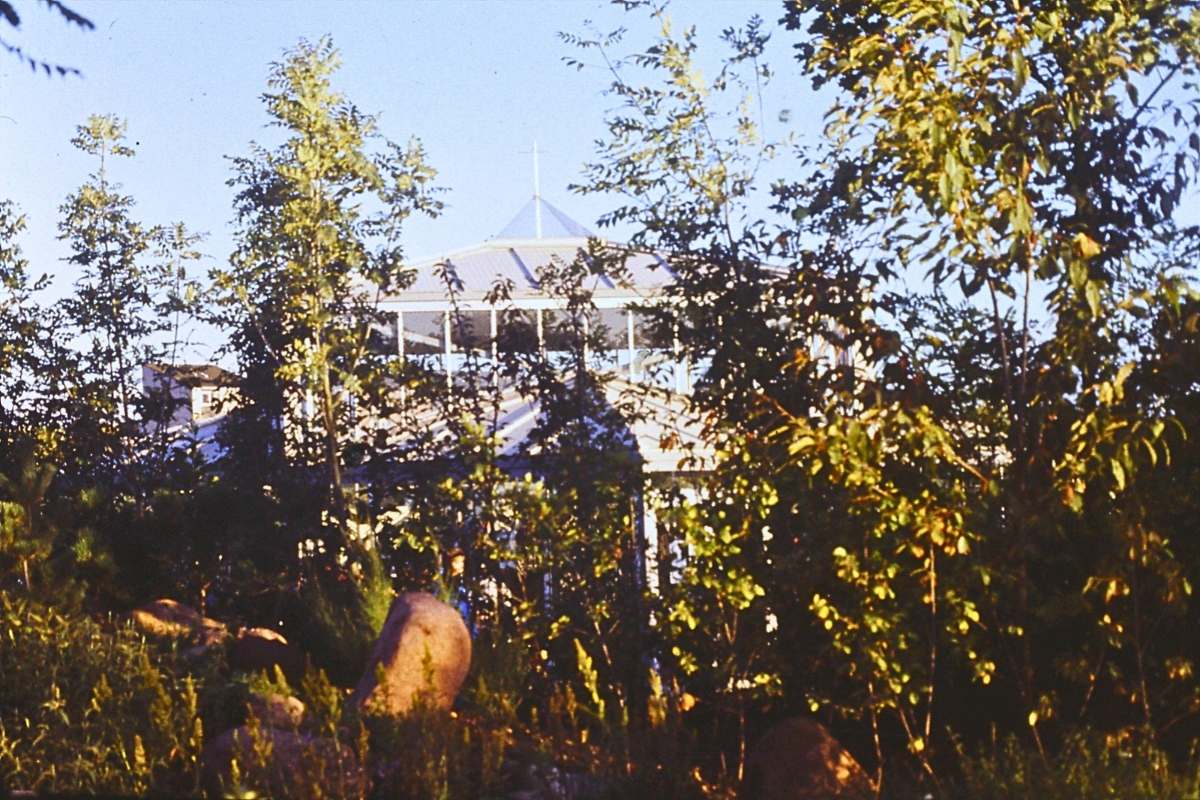
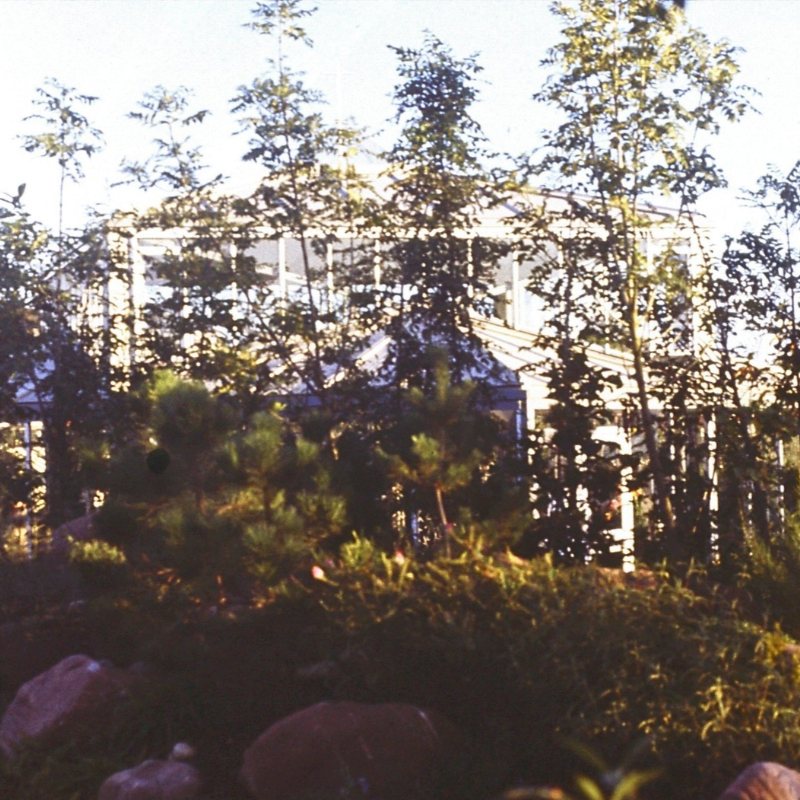
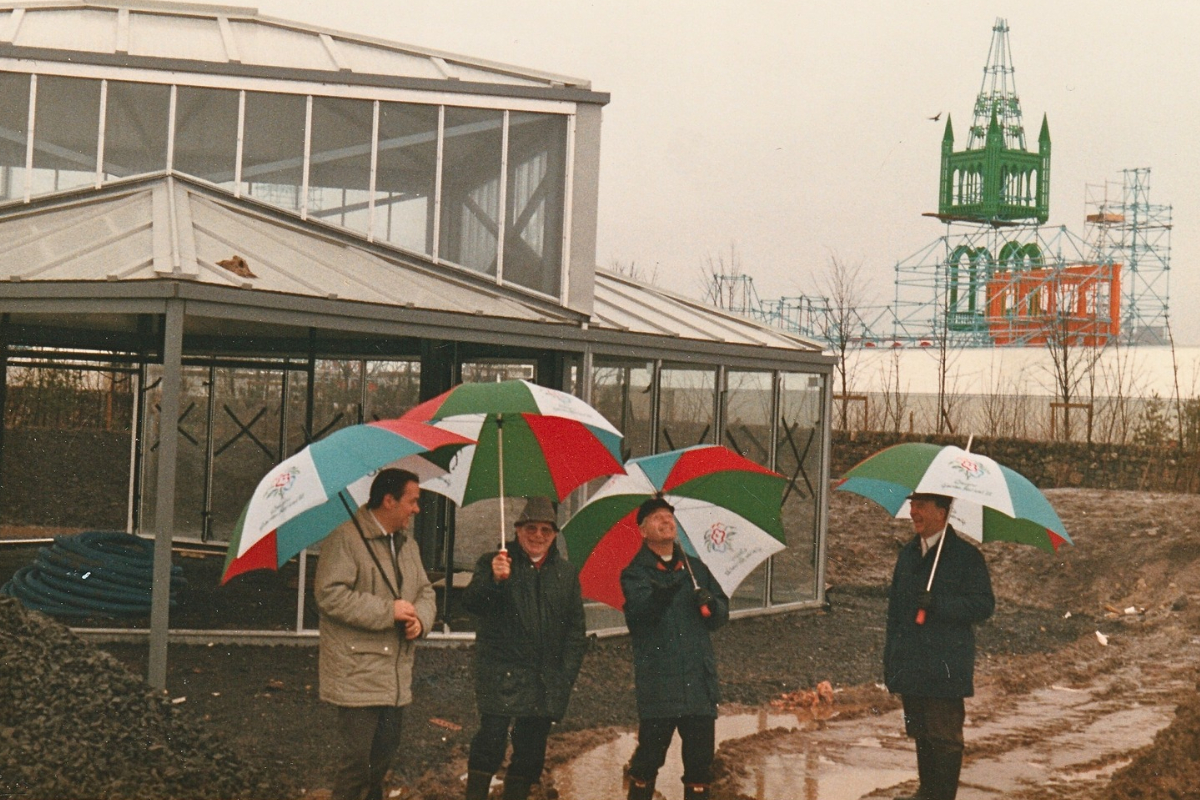
This was the glass church at the Glasgow Garden Festival of 1988. A unique church in that it was built and used by 15 denominations on the site of the old Pacific Quay. From spring until the autumn this glass pavilion offered worship twice a day with each service being taken by a different celebrant from any of the 15 denominations who sponsored the event.
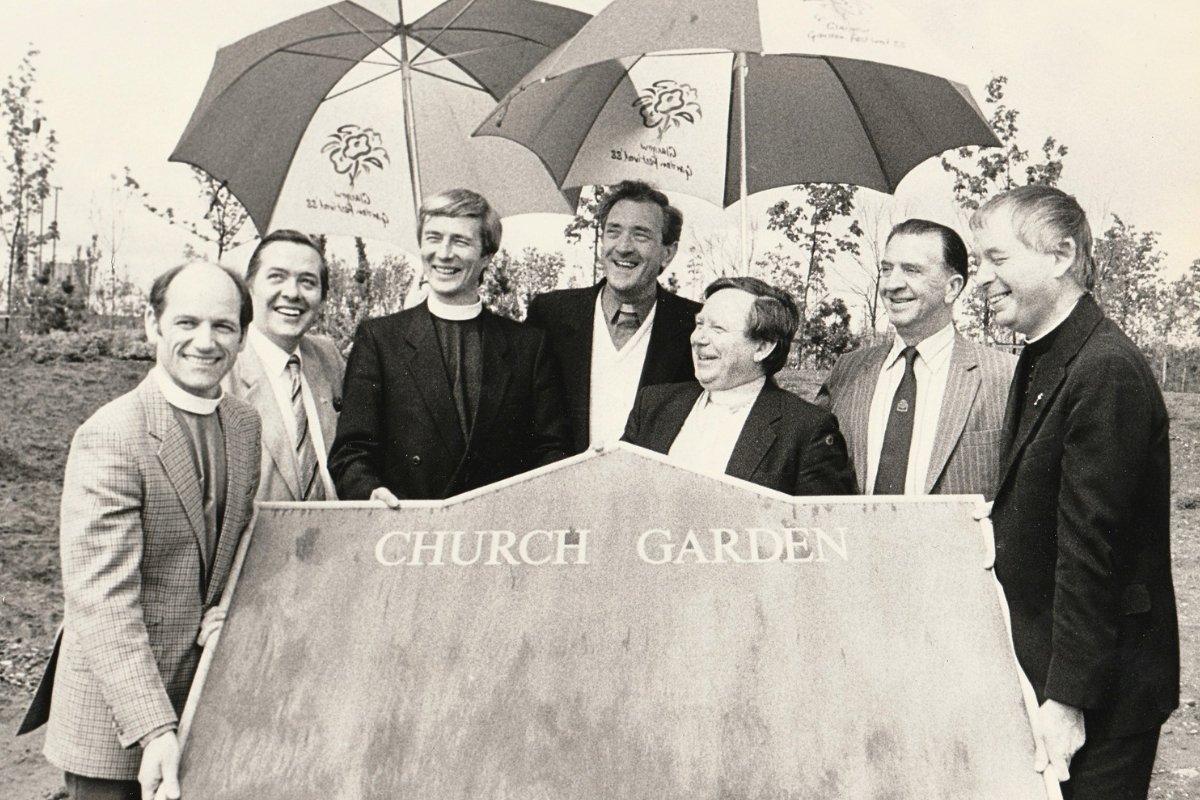
My name is Robin McHaffie, and I was the Parish Minister covering most of the site. From 1984 we began working with the Glasgow Festival Company to provide an exhibition garden in the name of the churches. The company would not work with one denomination which gave us the incentive to gather an inter church group to progress the project. My vision was to ensure no-one could say it was “just the church” but be a site that could happily sit amongst the best designs and largest exhibitors.
The Glasgow Garden Festival was one of many national festivals intended to provide regeneration and optimism on decayed urban sites. Many church leaders warmed to the idea of placing the church in the heart of that regeneration as a witness to a spiritual renewal that is the church’s story.
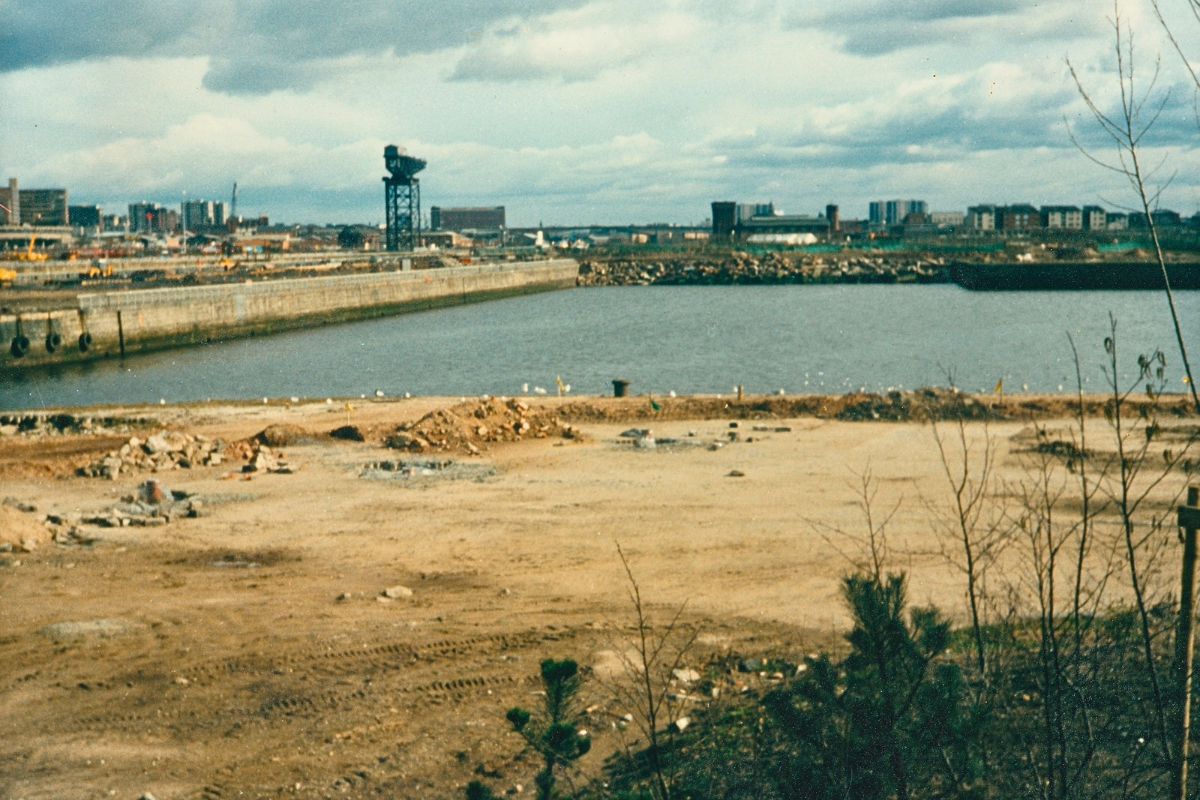
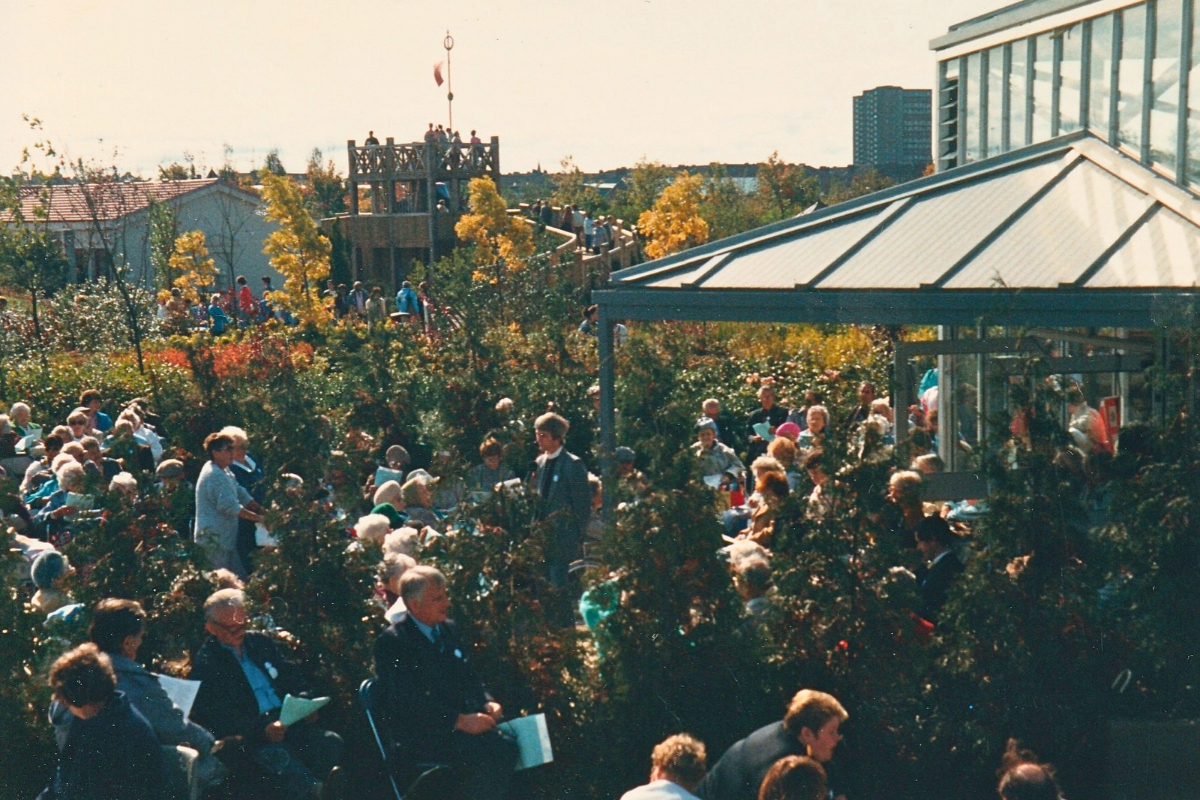
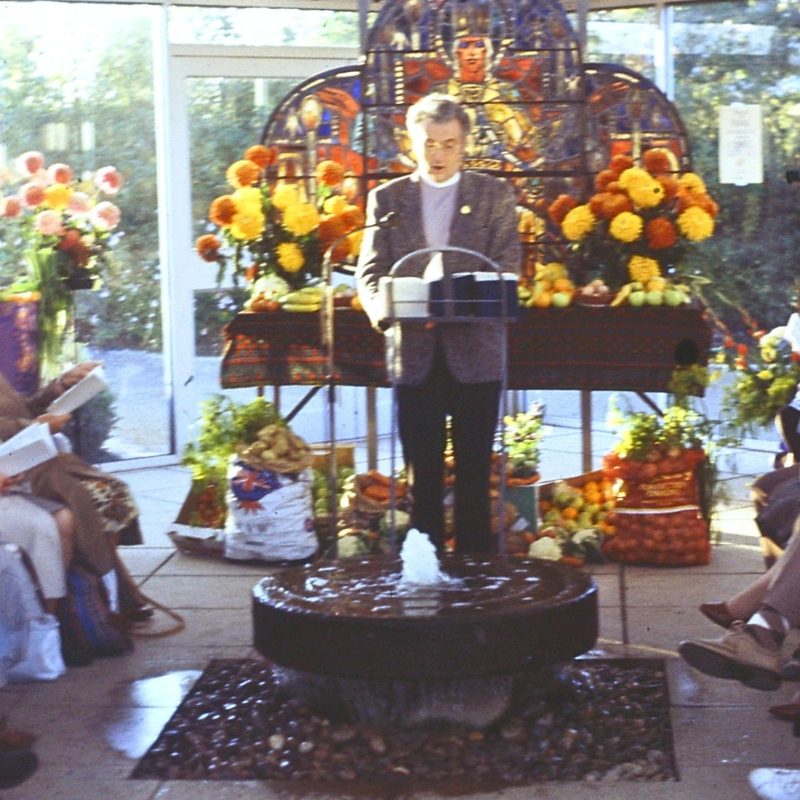
The garden was built around the theme of living water. It took Ezekiel’s vision of a trickle from the temple going out into the surrounding land, watering the trees and plants. Trees formed the temple pillars; a huge grinding stone provided bubbling water and a platform for Font and Lord’s Supper. We worshipped to the sound of gurgling water twice a day. On Sundays we took over a much larger gathering space for much bigger services.
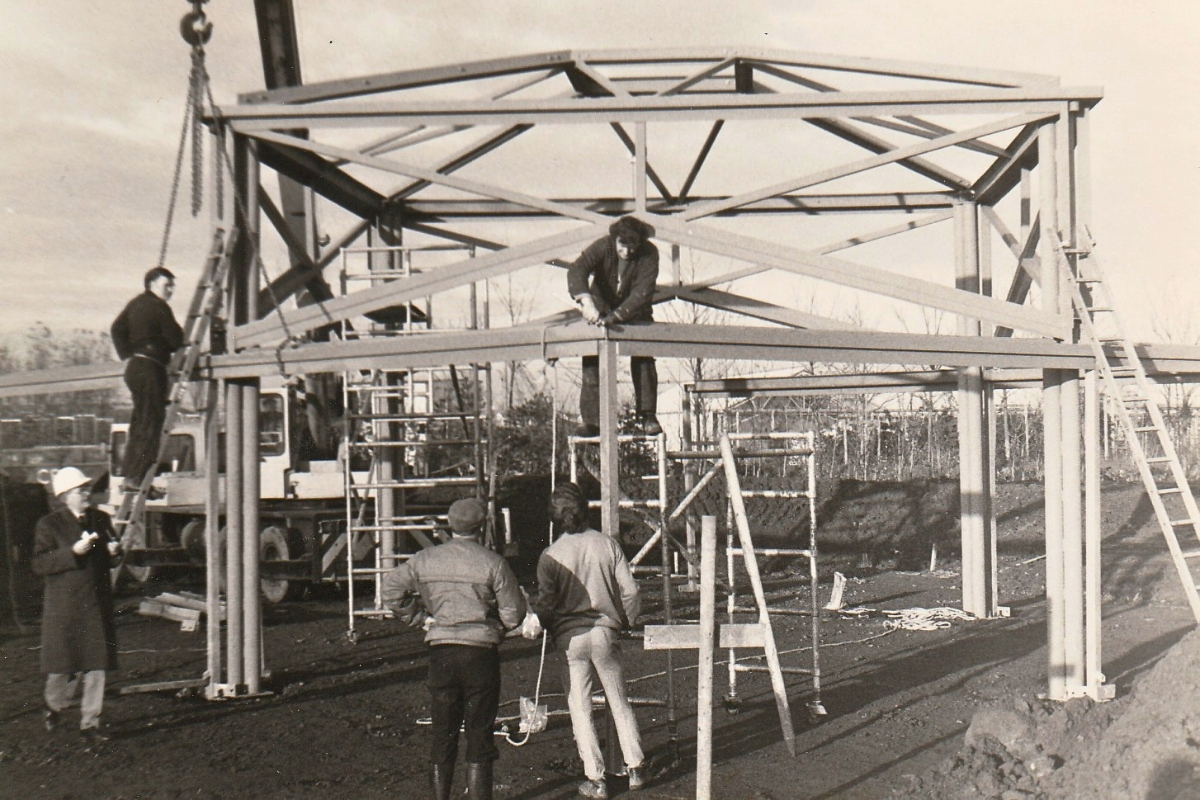
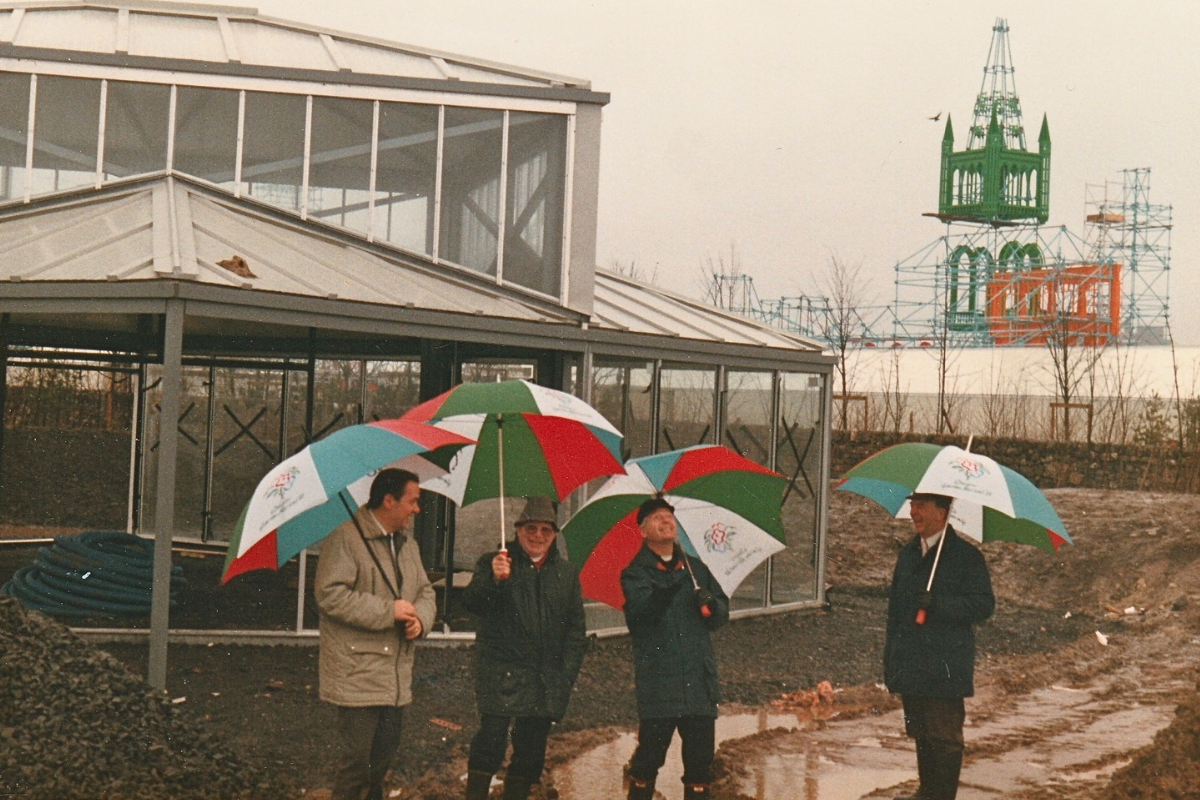
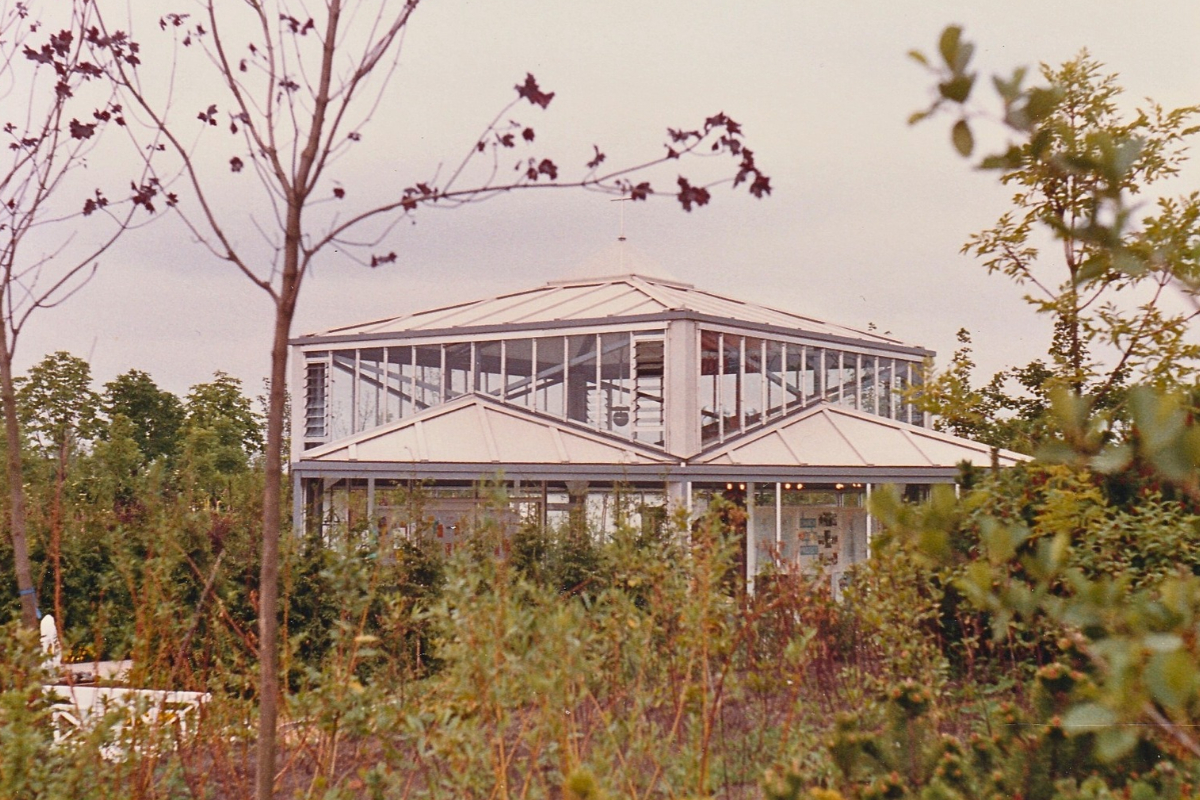
But the little chapel offered peace and a spirituality to visitors all day. Staff and volunteers were always on hand to hear and listen to visitor after visitor.
The project was huge. From 1994 when GGF announced its future presence, until it was signed off to us, we had to create a management team from the denominations. We had to negotiate a site, have it designed, get it funded and the resources to people it for the duration.
The Garden Festival Company were incredibly kind to us with their main contractors servicing our little garden project. Bovis did the Groundwork with Bill Gillespie and staff the actual design. As Parish Minister, and also active in the church in Glasgow and Scotland I was able to press the buttons that gathered enough enthusiasm to resource our project. My partner in this venture and into the Year of Culture was Rev Campbell Robertson, then Chaplain to Strathclyde Region. I remained as a Chaplain to the company and to the site before through and after the Festival itself.
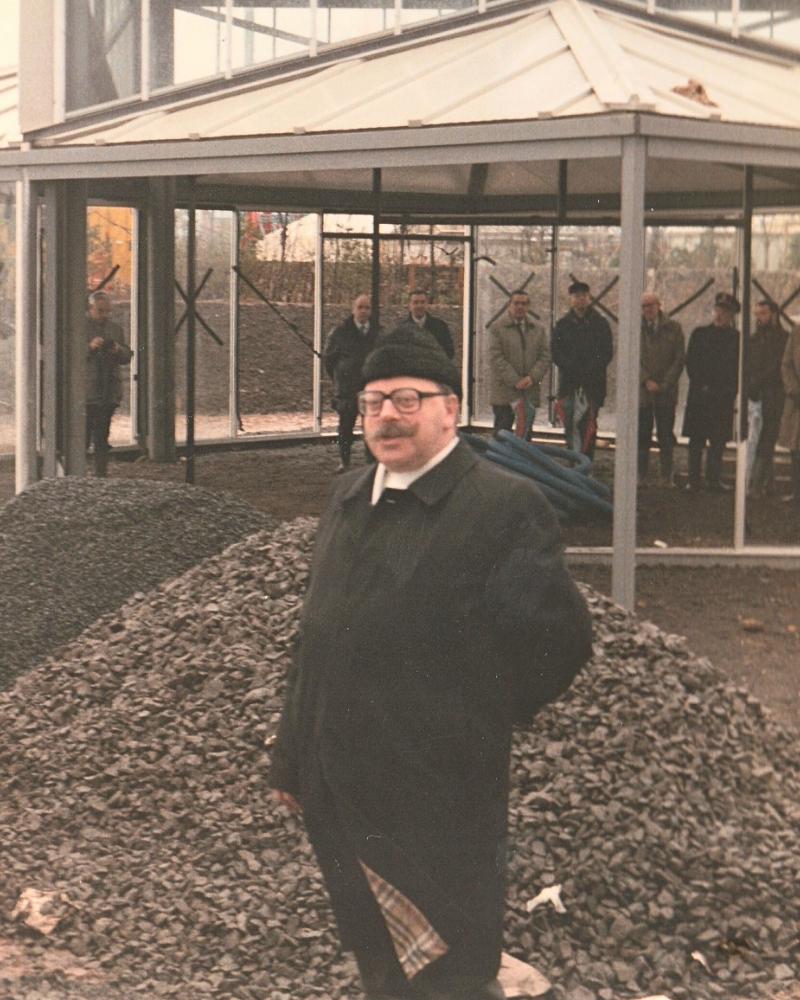
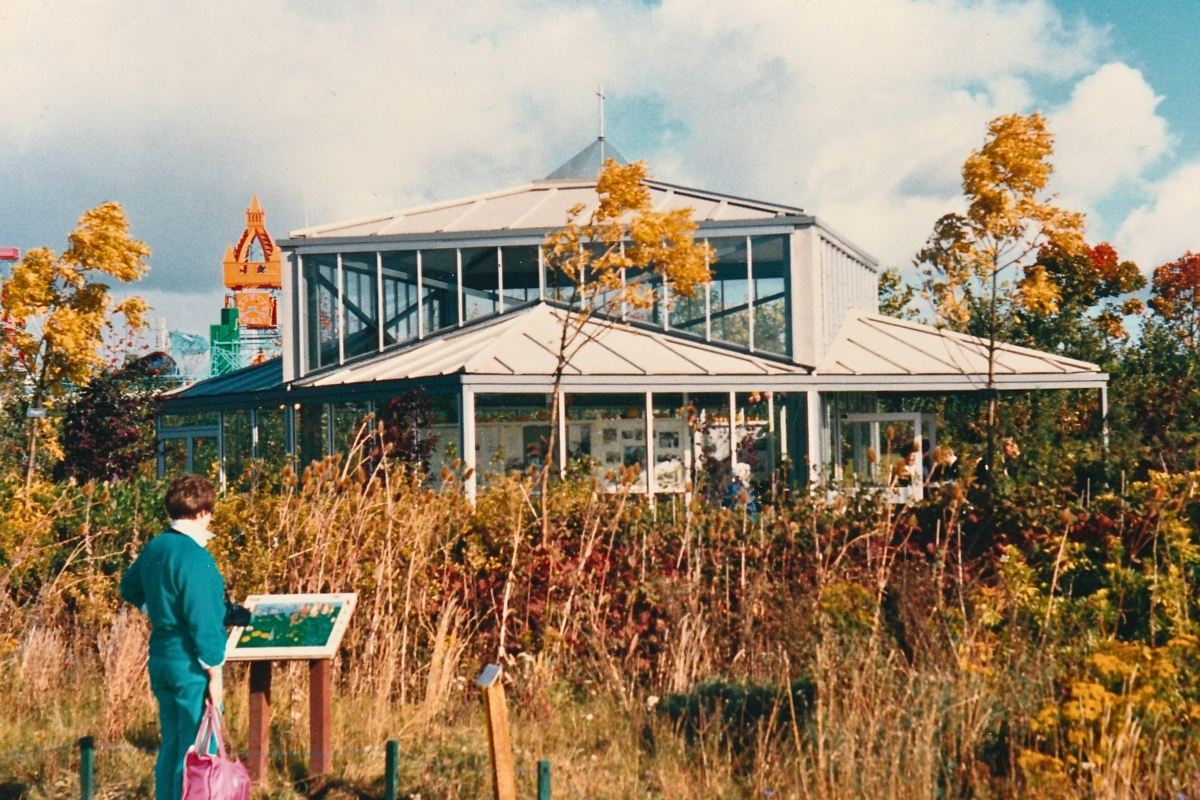
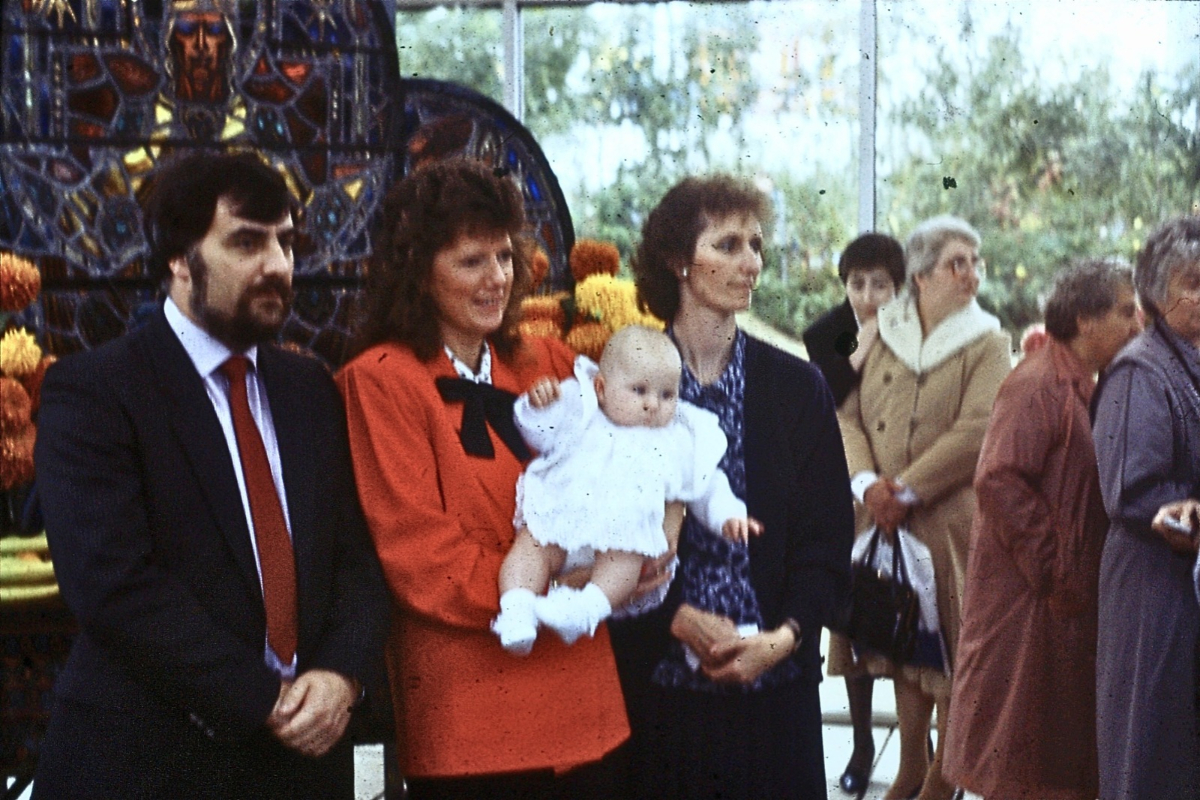
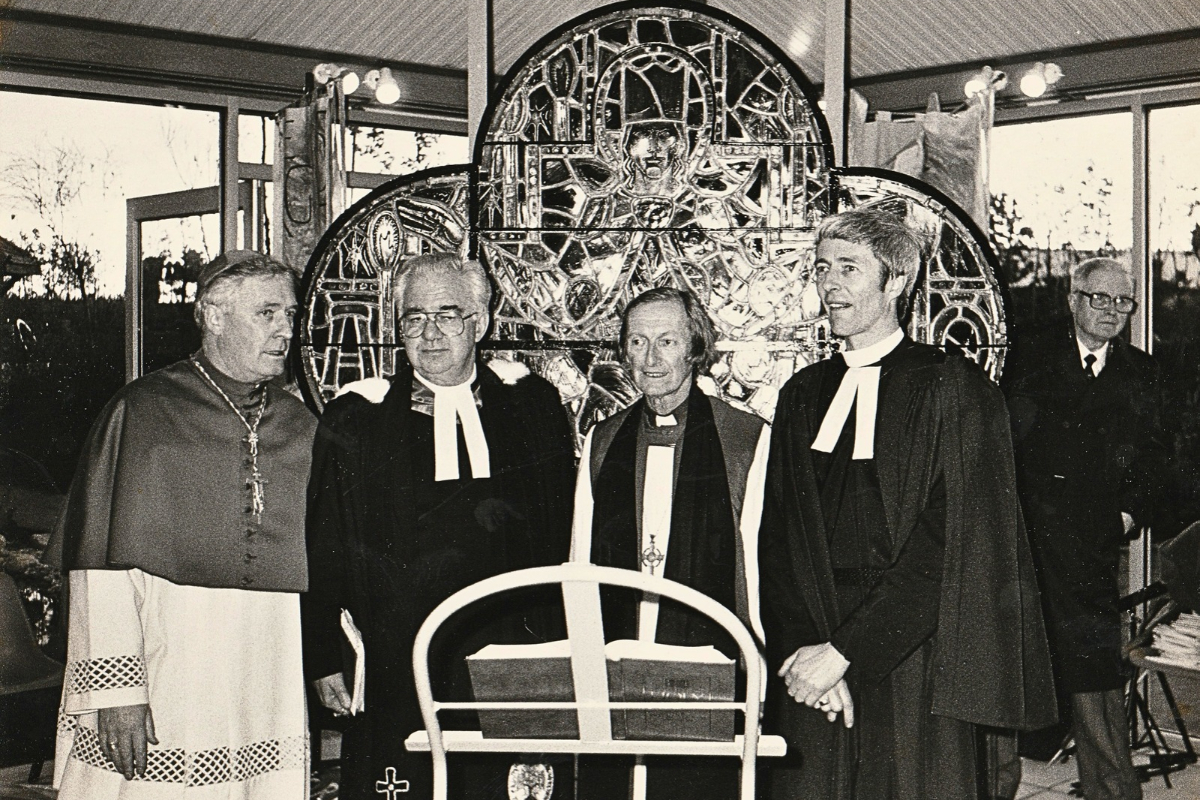
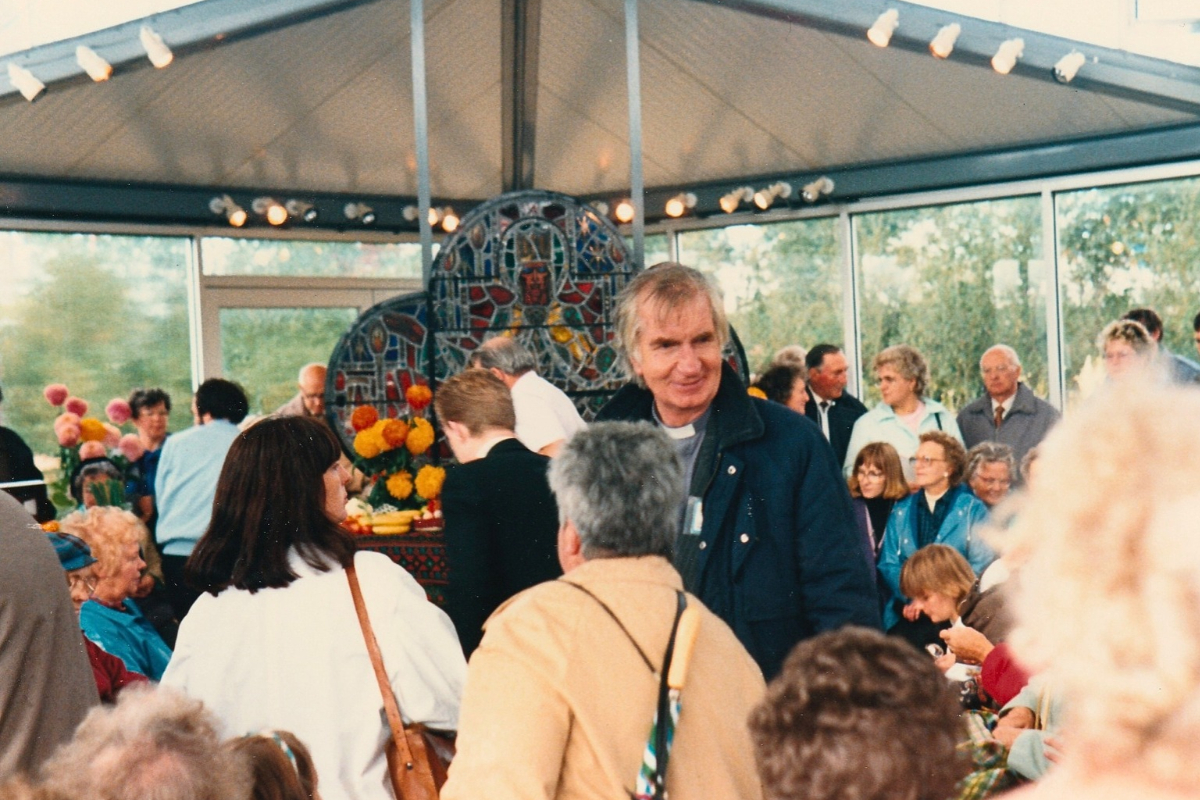
The church was an open framed glass building. Its design was recognisable as a temple style. Through Michael Donnely, of the Peoples Palace, we borrowed a lovely piece of stain glass, Christ in Majesty, to act as a screen. In front of the screen was our internal water feature of a millstone allowing water to tumble up and over. This had a raised glass cover for communion elements and as font for our one baptism (Was there only one?). Seating was stackable Alibert bucket seats and apart from a bit of storage behind the screen that was it. We worshipped in the garden and sensed the power of living water all around us. As a Glaswegian, Clydeside Minister and environmentalist the news that the salmon had returned to the Clyde fuelled the use of Ezekiel Chapter 47 and the river flowing from the Temple. That was the image we sought and the one the Architect from Gillespies delivered.
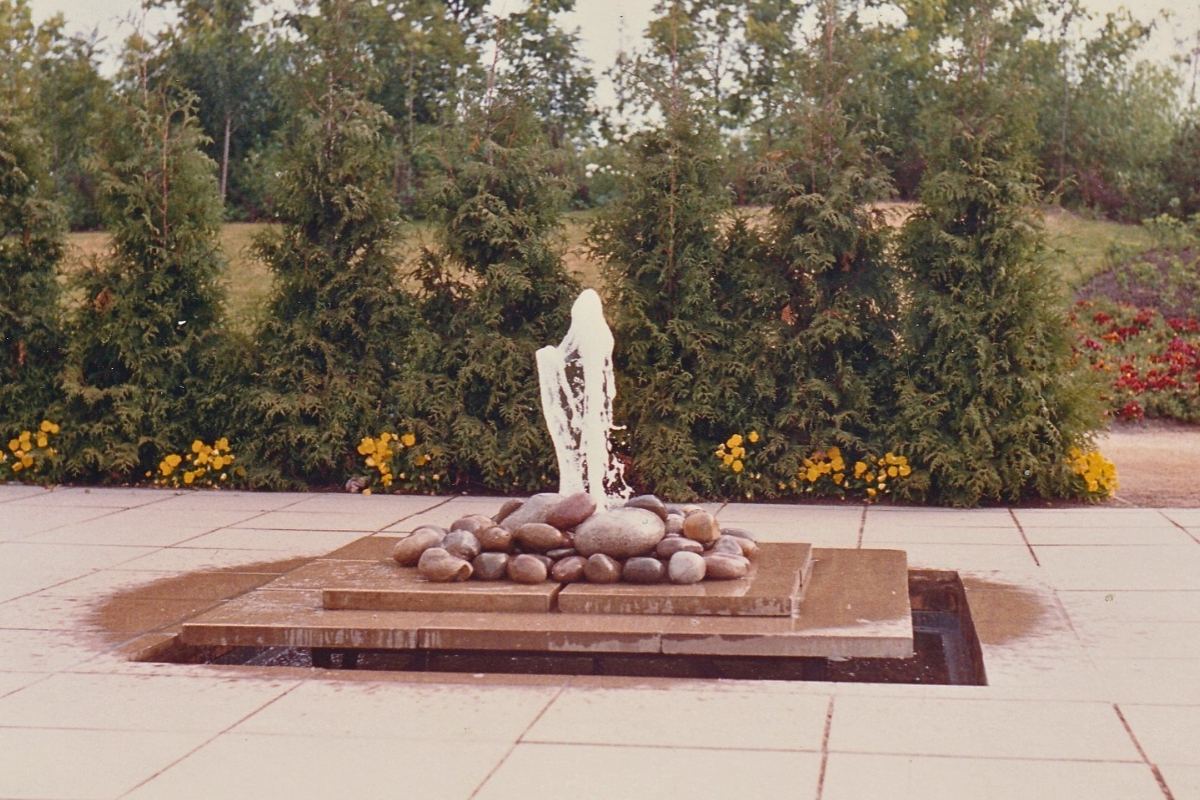
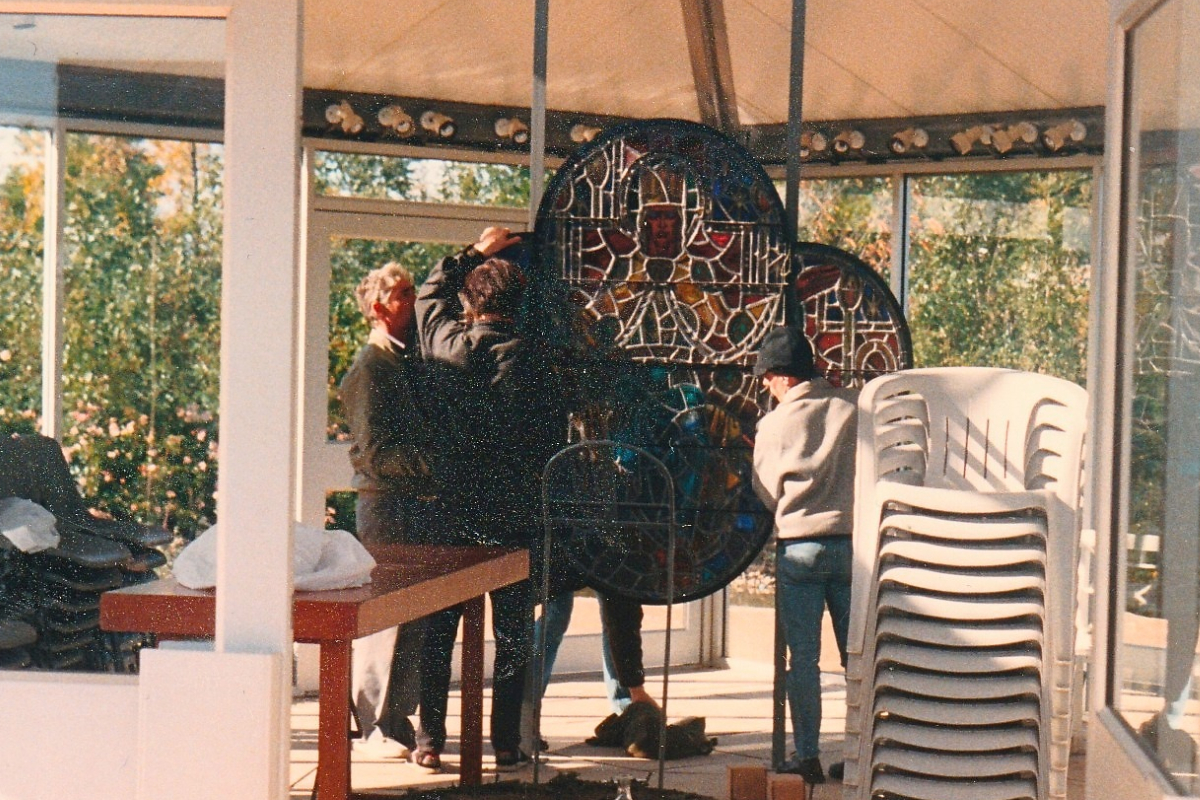
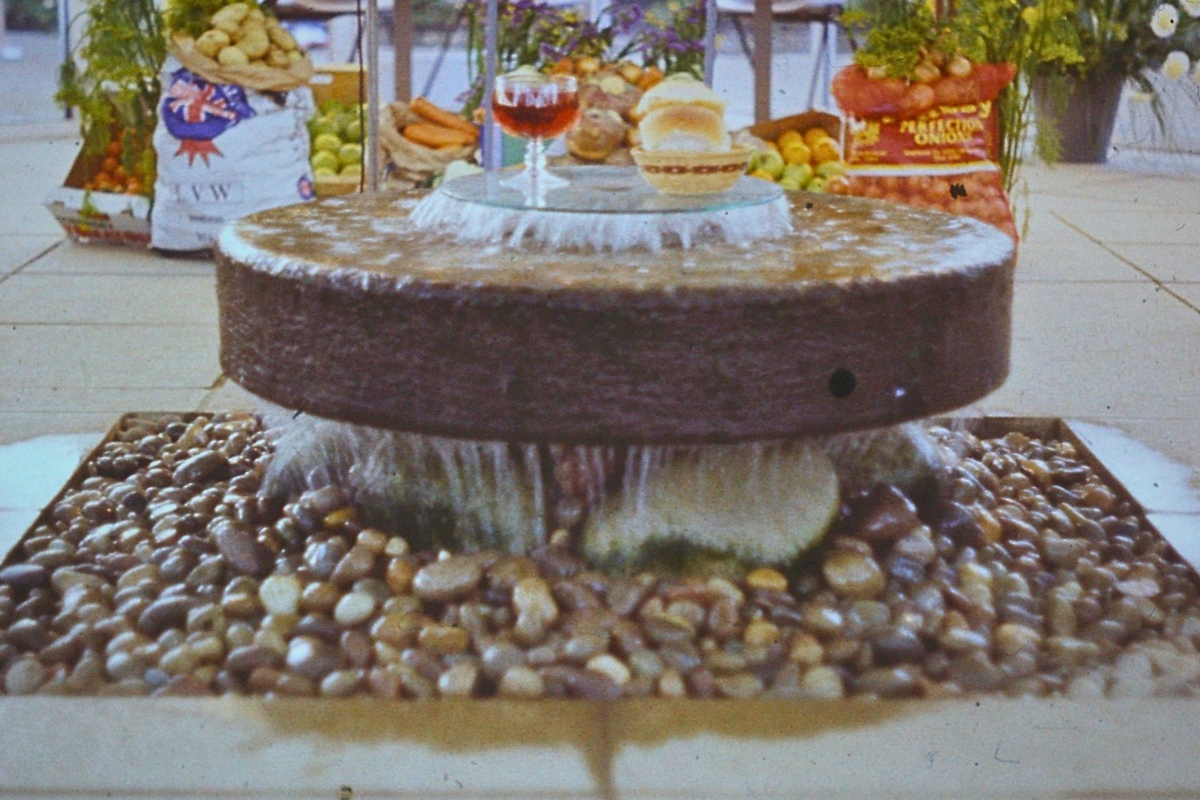
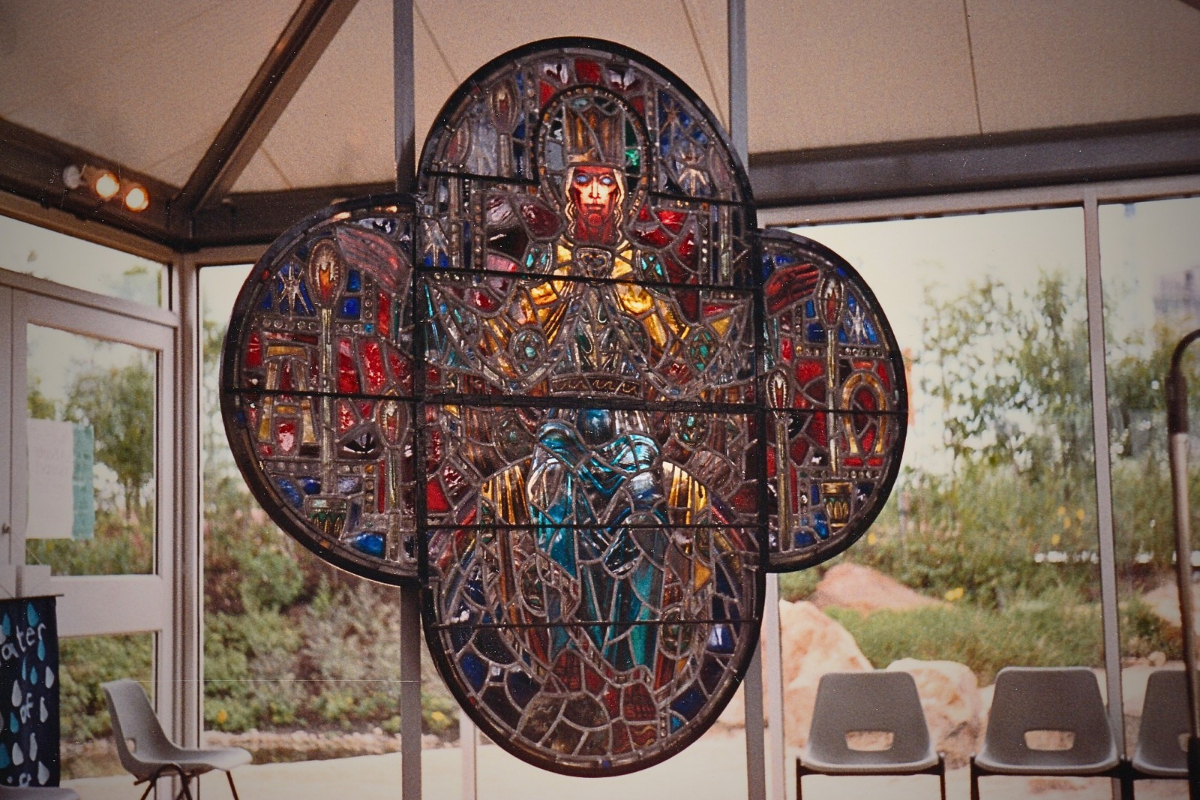
Inside the building our brief was to offer a sanctuary for private devotion, a daily act of worship (this became twice daily), a Christian enquiry service, counselling and chaplaincy. The garden to be a place of rest in a busy space.
We had a Director for the Project in the Rev Douglas Aiken, assisted by The Rev Gordon McRae and a team funded by MSC which brought the total to 26 personnel over the time of preparation, the Festival and winding up. The project had a total cost of £200,000. (£600,000 today) of which £75000 came from MSC and the remainder from the churches or offerings.
Not all saw this means of regeneration as value for money. The cost of the Garden Festival was estimated as £35 million. I am not sure if that includes the individually financed gardens, Which is nearly £100million today. In response to this cost The Rev John Harvey, then leader of the Iona Community, made the point that the Govan initiative would have dealt with clearing the site anyway and the money could have been spent on more needy projects.
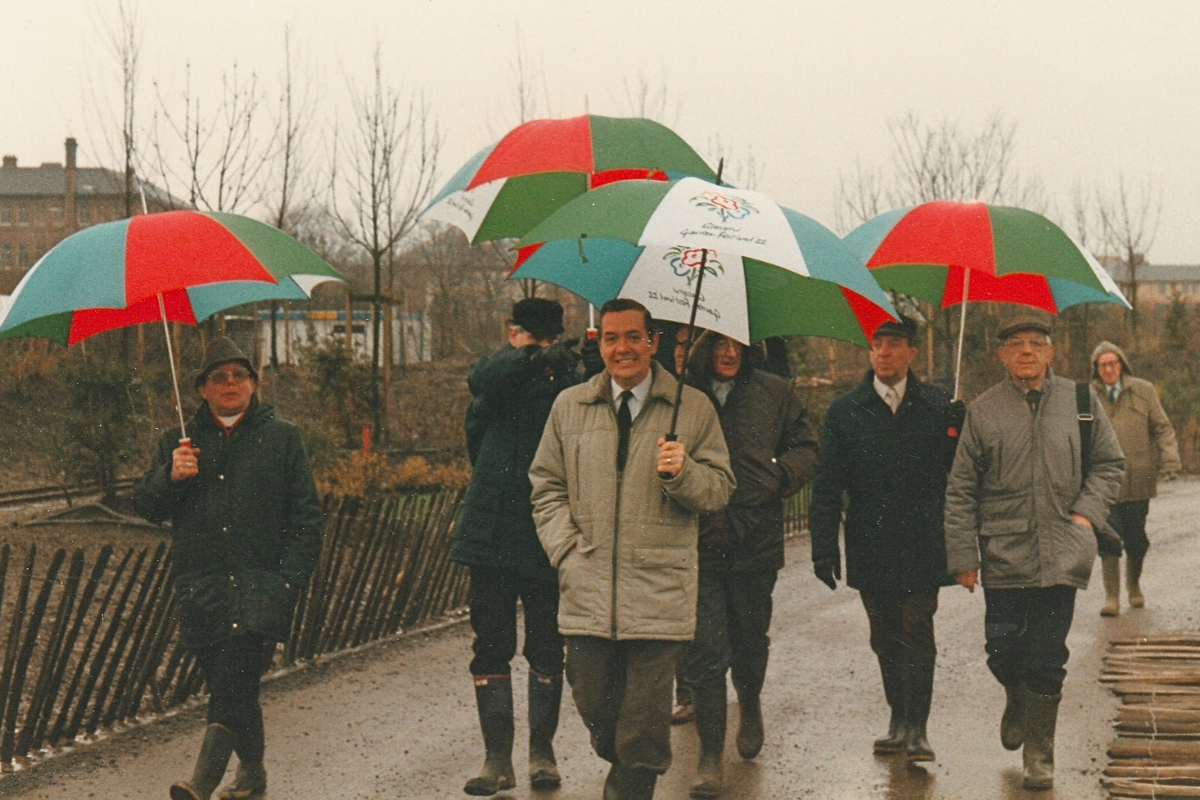
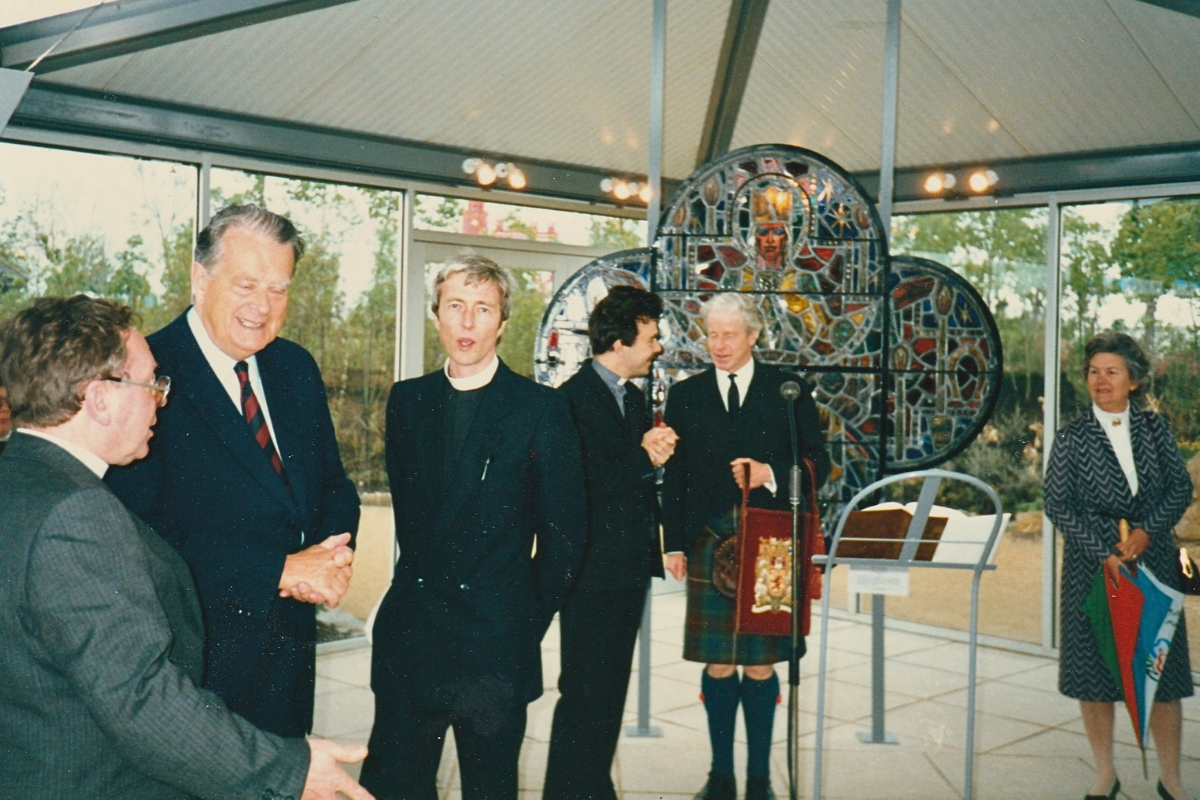
On our involvement as Church there was a huge pride throughout the denominations, congregations and individual church members at the church’s presence.
John Drane as Leader of the mission committee of the Scottish church’s council organised a Pentecost day that has gone down in the annuls of Church Mission as a supreme example of Christian celebration in a public space. It is estimated that 48,000 attended and John received a Government award. The GGF execs said this was the day the Garden Festival kicked off. (Sunday 22nd May)
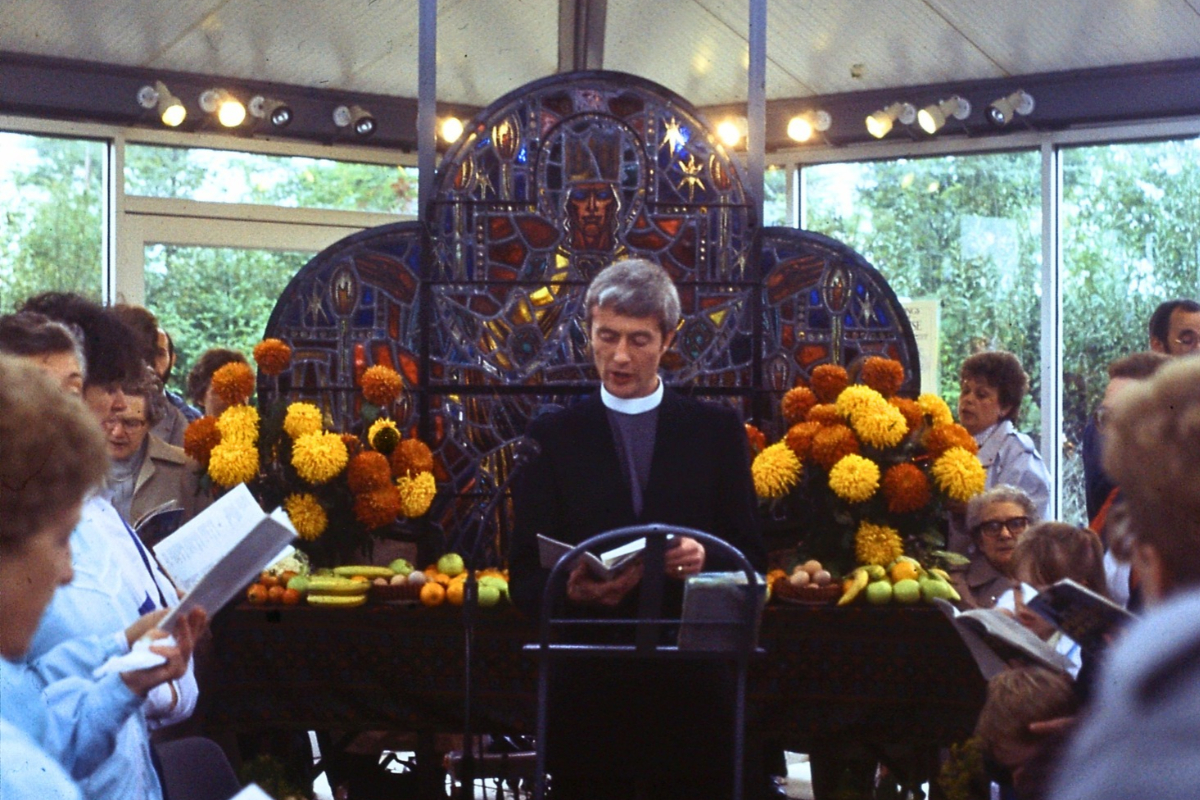
I suppose it is to be expected that this achievement would be noted nationally.
Yet it was the day to day ecumenical presence of a church witnessing to a Christ in our midst that I feel was real and sacrificial evangelism. We offered a daily mission, education, social care, a platform for ministry and an opportunity for communication of the churches story and God’s love.
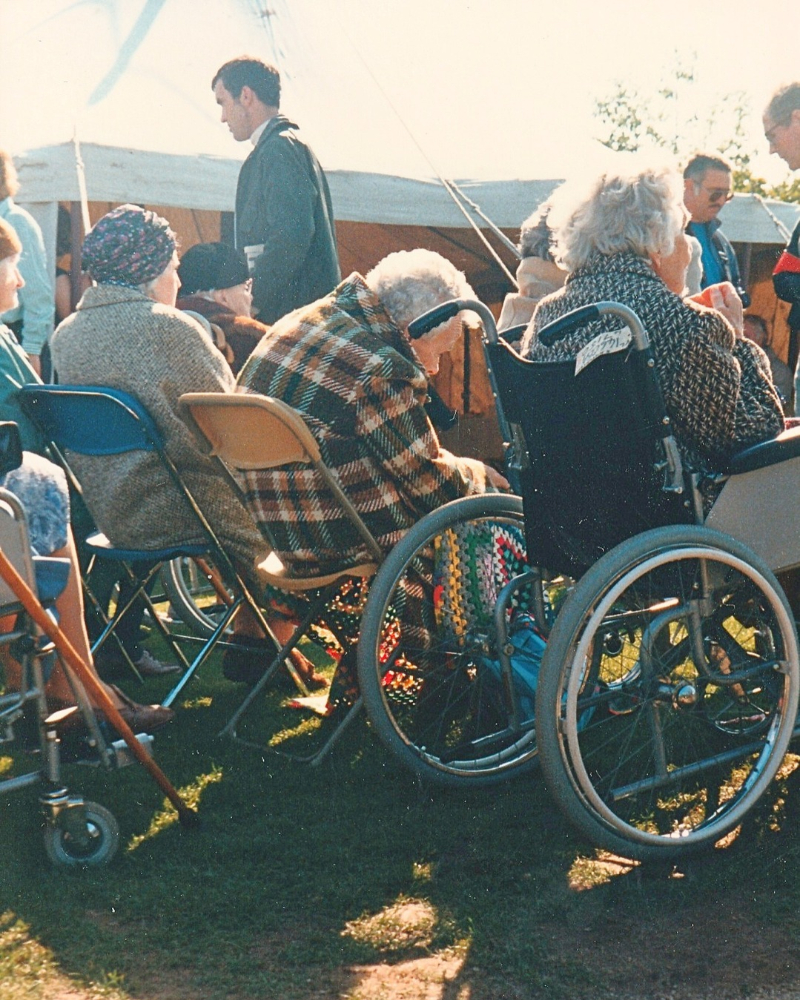
One event that sticks in my mind is the day Joyce Carswell (Director Church of Scotland Social care) brought 650 residents from residential homes plus carers and staff for the ‘biggest picnic’ in Scotland.
Yet it was how individuals responded that gave me the biggest affirmation that it was all worth the effort.
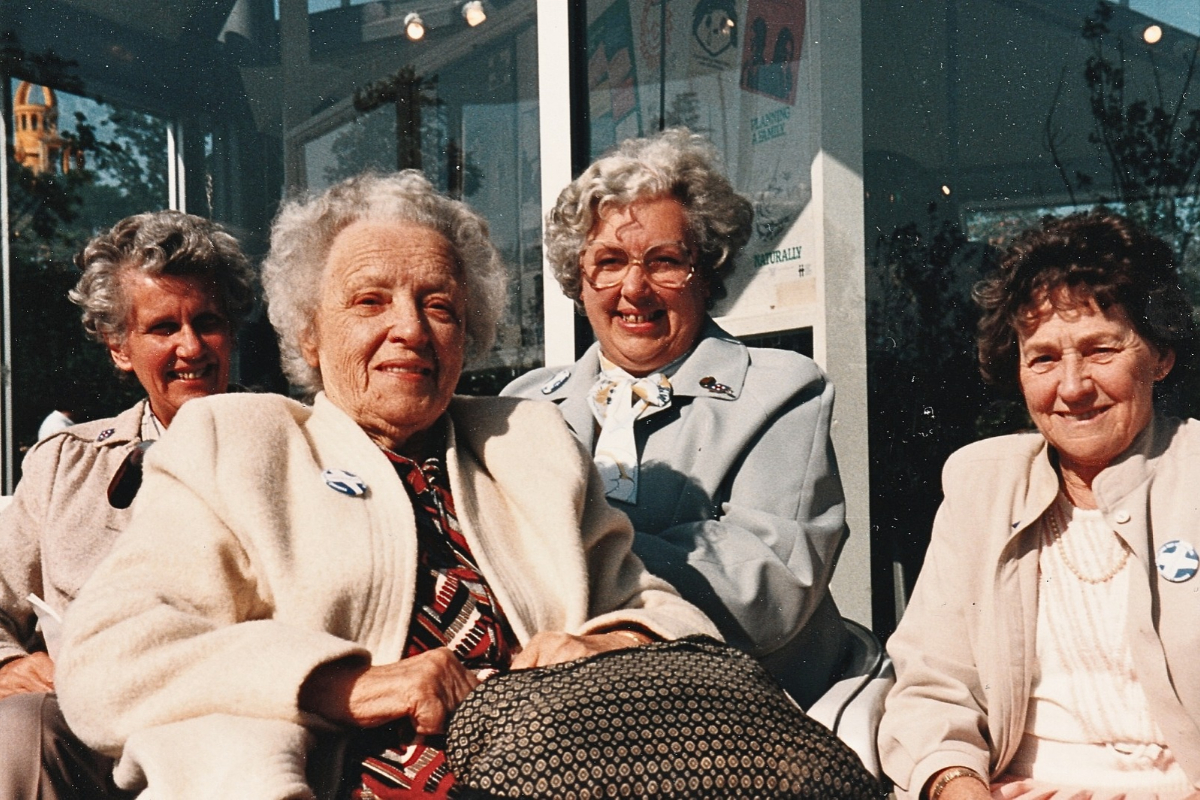
In the programme, Miricle on the Clyde, Douglas Aiken interviews Nancy. This lady was one of many who formed our regular congregation. She says that her day would not be complete without a visit to worship. From day one she watched our ‘church’ be a place of worship, rest, a meeting place and, in July, a shelter from Glasgow’s rain. She loved the format and heard profound, inspired, comforting and joyful worship.
We noted 250 different worship leaders over the months. One quote that has stuck in my mind came from Derek Rawlcliffe (Bishop of Glasgow and Galloway:
“Let us not do apart the things that we can do together…”
Notes and acknowledgements.
My daughter and I would like to write a paper for the Sociology of Religion Study Group. To this end we would like to gather any correspondence, memories and comments about the church at the Garden Festival that anyone would like to share with us. Please email me here.
People – From the Chief Executive through to office staff I would like to thank everyone at the SDA and the Garden Festival who believed in us and facilitated our presence not only in our own garden but through the site.
To Douglas Aitken, Director, and Gordon McRae with the staff in Kinning Park your skill and enthusiasm made the day to day working of the Church Garden possible.
As we approach the 40th Anniversary a reminder that the Garden Festival led into the Year of Culture with the Spirit of the City project which led into the formation of Glasgow Churches together. It took from 1994 to 1991 to get there. A huge amount of energy and persuasion got us there. Is that energy still alive?
If you wish to see the Glass Chapel today you will find it in Scotland’s National Marian Shrine, Carfin Grotto, St Francis Xavier’s Church, Taylor Avenue, Carfin, ML1 5AJ
To the Rev Campbell Robertson, friend and collaborator, your skill, networking and tact got us there. I still miss you.
Our enormous thanks to Rev McHaffie for sharing his recollections of this temporary church at the heart of Glasgow’s Garden Festival in 1988 and these wonderful images. If you would like to write a blog for our website about your favourite Scottish church or on some other aspect of Scottish religious built heritage do please get in touch.